Infection in pregnancy and/or after your baby’s birth should never be ignored. Some infections can progress to a more serious situation known as sepsis, where the infection spreads to the blood stream and through the whole body. If left untreated sepsis can lead to shock, organ failure and death. Whilst most women do not suffer from infection or sepsis during or after pregnancy, it needs to be recognised and treated quickly if they do.
Signs of sepsis
The first signs of sepsis are usually a rise in your temperature, heart rate and breathing. You may also feel unwell, have chills and flu-like symptoms and a worrying pain in your tummy and/or diarrhoea. This can progress very quickly so it is important to seek advice if you are concerned about your health.
How can infection in pregnancy or after childbirth be prevented?
Good personal hygiene helps. This can include: daily showers/baths, proper hand washing and drying, perineal hygiene to include keeping the perineal area (between the vagina and back passage) clean, dry and frequent changes of maternity/sanitary pads. It is important to wash your hands before and after going to the toilet and changing maternity/sanitary pads.
When am I more likely to get an infection or sepsis?
Sepsis may happen in pregnancy or after your baby is born. The risk of getting an infection is increased in the following circumstances:
After having a miscarriage or an ERPC (ERPC – evacuation of retained products of conception is a surgical procedure to remove tissue from the womb)
Premature rupture of membranes (when your waters break long before your baby is due)
If your waters break more than 24 hours before your baby is born
If you develop a urine infection (UTI)
If your baby was born prematurely/early (before its due date)
After you have had your baby – this is the most common time for serious infection to develop; especially if you had your baby by an emergency caesarean section, by forceps or vacuum delivery, or if you had a perineal wound or an episiotomy).
When should I contact the midwife or doctor?
You should contact your GP or the maternity unit if you are worried, unwell and/or if you notice any of the following:
Pain/burning on passing urine or struggling to pass urine, this could be a symptom of a urinary tract infection
Vaginal discharge which may be foul smelling and/or an unusual colour, this could be a sign of a genital tract infection (vaginal/womb infection)
Abdominal pain that does not seem to be getting better with simple analgesia, this could be a sign of womb/wound infection or abscess
Chills, flu type symptoms or feeling faint and unwell
Fast breathing or shortness of breath
Fast heart rate
Persistent cough with or with sputum, shortness of breath or chest pain could be a sign of chest infection or pulmonary embolism (blood clot in the lung)
A wound that is not healing well, broken down or is red
Severe pain in one area of breast
Diarrhoea
Sudden increase in vaginal bleeding (after your baby is born).
Contact the maternity unit where you gave birth, your midwife or GP for urgent advice.For more information:
There are no rules about when you tell an older child that a new baby is on the way, but opinion suggests it is wise to do so when you tell others so they hear it from you directly. A small child will find it difficult to visualise what this will mean for them so using books or pictures can help, or by reference to other friends who may have had a new brother or sister recently. Provide whatever information is needed within the child’s level of understanding.As the pregnancy grows, spending time to “talk” to the baby together enables the older child to make a connection and feel the baby kick (“talk back”). Bringing home a newborn is a little different the second time around. With your first child, you’re focused on figuring out how to care for a baby. With the second baby, you’re likely to wonder how your older child will react to having a new sibling.The links below offer useful advice on how to handle this transition.
Domestic abuse may start or get worse during pregnancy or after giving birth.Domestic abuse includes a range of behaviours including: emotional, psychological, financial, sexual and physical abuse. A person choses to use this abusive behaviour in order to control their partner, ex-partner or family member(s) and it endangers the woman and her unborn child. The abuse is never the fault of the victim/survivor.If you feel afraid of your partner, ex-partner or family member(s), or change your behaviour as you are afraid of how they might react, you may be experiencing domestic abuse.
Domestic abuse is not something you need to manage alone. If you want to access support for domestic abuse, some options are:
Contacting your local Independent Domestic Violence Advisor service
Speaking to a domestic abuse helpline:
24 hour National Domestic Violence Helpline:
0808 2000 247
National LGBT+ Domestic Abuse Helpline: 0800 999 5428
Speaking to your Midwife, GP or Health Visitor
In an emergency, you should contact 999.The Silent Solution is a police system used to filter out large numbers of accidental or hoax 999 calls. It also exists to help people who are unable to speak, but who genuinely need police assistance. You will hear an automated police message, which lasts for 20 seconds and begins with ‘you are through to the police’. It will ask you to press 55 to be put through to police call management. The BT operator will remain on the line and listen. If you press 55, tap or make a noise, they will be notified and transfer the call to the police. If you don’t do any of the above, the call will be terminated after 45 seconds.If you pressed 55, a police call handler will announce that you are through to the police.If you can’t speak, you will be asked to tap the phone, make a noise or press 55. The police call handler will try a number of ways so that you do not feel under pressure to carry out just one prescribed action.Only by pressing 55, tapping the phone, coughing, or making noise are you guaranteed a response to your call from a police call handler despite your silence. It is much easier to speak to the operator. But if you must stay silent, a mechanism has been provided that you can use to acquire help regardless.Pressing 55 will not bring emergency services to your door and does not allow the police to track your location. By choosing to stay on the line, you are informing the police call handler that you might have an emergency that keeps you from talking, and they will do everything they can to determine your location so they can deploy officers to you.The police call handler will try and engage with you, if you remain silent they will attempt to engage further and ask you to tap the phone if you are unable to speak; for example, yes and no questions can be asked by the call handler and answered using one keypad press for yes and two for no. If the police call handler has concerns about your safety, they will continue to try to communicate through sound.If you are able to speak without putting yourself in danger, the police call handler will ask just yes and no questions if necessary. In some cases, the conversation is led by the caller, who sometimes tries and speaks to the police call handlers in code, if for example the perpetrator has reappeared.If you can say only one thing, please say your location. If you call from a mobile, we can pin point an estimate location but this does not narrow down enough to provide data we can locate you on.Police call handlers can request subscriber checks and can carry out background checks to assist in locating you. This can depend on whether you have contacted the police before. Also, if your phone is registered to you, it could determine whether this will provide a potential location for you.The police call handlers will deal with calls on a case by case basis, as each call is different, and the style of the call is adapted in line with the circumstance.If you feel you are perpetrating abuse against your partner, ex-partner or family member(s), you can contact:Respect Helpline: 0808 802 4040
FGM is sometimes called female genital cutting or female circumcision. The definition of Female Genital Mutilation is “any cutting or damage to the external female genitalia that was carried out for non-medical reasons”.It is a form of child abuse and is a cultural practice that is illegal in the UK.FGM is carried out in many parts of the world including Africa, Asia, the Middle East as well as among certain ethnic groups in Central and South America.
Through migration of peoples it is also found in Europe, USA, Canada, Australia and New Zealand.
What are the different types of FGM?
The World Health Organisation (WHO) estimates that 200 million women and girls worldwide have been affected by FGM.WHO has classified 4 Types of FGM:Type 1: part or all of the clitoris and/or clitoral hood has been removed.Type 2: part or all of the clitoris and/or clitoral hood has been removed, as well as the inner labia (lips that surround and protect the urine hole and vaginal opening).Type 3 (pharaonic circumcision): the labia or inner lips have been removed and the remaining edges are then sewn together or fuse together forming a layer of scar tissue with a small single opening at one end.Type 4: any other harmful practices to a woman’s genitals such as pricking, piercing, stretching or burning.
Possible health problems resulting from FGM
urinary infections
vaginal infections
painful periods
painful sex
feeling sad, anxious or depressed
problems during childbirth.
FGM and pregnancy
In pregnancy all women will be asked about FGM. Women with FGM should have a appointment with a specialist midwife or doctor in order to make a personalised plan of care as FGM may have physical and/or psychological consequences that can affect your pregnancy or labour. A safeguarding risk assessment will be carried out to ensure that, if you have a baby girl, she will be protected from FGM.
FGM and UK law
In the UK, it is against the law:
for anyone to carry out FGM
to take girls or women who live in the UK to another country to carry out FGM
to help someone else carry out FGM (this includes making travel arrangements)
to sew women up after childbirth (known as reinfibulation).
Women with FGM
If you thing you have FGM tell your midwife. She will refer you to a clinic where you will be given support by a FGM specialist midwife.
How can I protect my daughter/s?
The following resources are helpful:
NSPCC/FGM Helpline: 0800 0283550
Police (emergency): 999
Non emergency: 101
Foreign and Commonwealth office (if abroad): 00 44 207 0081500
After you have had a baby it is important to wait until you and your partner feel happy, ready and comfortable before resuming sexual intercourse. The timing of this will be individual to each couple. Some factors may increase the time you choose to wait before having intercourse. If the birth has been traumatic, physically or mentally, it may take longer for you to feel ready to have intercourse.Some women have reduced interest in intercourse following childbirth, particularly if breastfeeding. More often than not your libido will slowly return to what was normal for you. A lasting low libido can be a sign of postnatal depression or post-birth trauma. It can help to talk to your partner, midwife, friends, family, health visitor, or GP to see what help and support might be available.Many women find that sex is painful after birth, and that they are less lubricated naturally than they were before. Using a lubricant can help, as can taking it gently and communicating with your partner. If sex continues to be painful, you can always seek support from your healthcare provider. Intimacy can take on many forms and does not necessarily need to include penetrative vaginal intercourse. Kissing,
foreplay, cuddling, mutual masturbation, oral sex and other forms of intimate play can be less pressured whilst helping you to connect with your partner.It is possible to become pregnant again from just three weeks after the birth even if you have not had a period and are breastfeeding, therefore it is important to consider using contraception to avoid an unplanned pregnancy. Research suggests that becoming pregnant again within 12 months of having a baby can increase the chance of your baby being small for gestation, premature or even stillborn.Some maternity units are able to supply contraception before you are discharged home from the hospital. Your midwife will discuss your options during your pregnancy as it is easier to think about these before the arrival of your baby. Babies can be time-consuming and it may be difficult to access reliable contraception once you are home. All of the methods listed below are safe whilst breastfeeding. Ask your midwife for information on what is currently available in your maternity unit.Intrauterine contraception can be inserted at a planned (elective) caesarean section. A device (coil) is inserted into your uterus after birth and can remain there providing reliable contraception for 5 to 10 years, depending on the type (hormonal or non-hormonal).An implant, which is a matchstick sized rod inserted under the skin of your upper arm, can also befitted before discharge. The implant slowly releases progestogen hormone and provides reliable contraception for 3 years. The benefit of these methods which are known as long acting reversible contraception (LARC) is that you don’t need to remember to use contraception every day and therefore they have very low failure rates. Both intrauterine contraception and implants can be removed at any time at your GP Practice or local Family Planning/Sexual Health Services.Alternatively, a six month supply of progestogen-only pills or a progestogen-only injection which provides contraception for 13 weeks can be made. The failure rates of both these methods are much higher if they are not taken exactly as recommended, for example if you forget to take pills or do not receive your next injection when it is due. Your GP practice or local Family Planning or Sexual Health Clinic can provide you with further supplies of these methods.Ask your midwife about the advantages and disadvantages of each method to help you decide which method might be suitable for you.Find further information here:Sex and contraception after birth


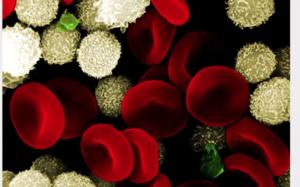 Infection in pregnancy and/or after your baby’s birth should never be ignored. Some infections can progress to a more serious situation known as sepsis, where the infection spreads to the blood stream and through the whole body. If left untreated sepsis can lead to shock, organ failure and death. Whilst most women do not suffer from infection or sepsis during or after pregnancy, it needs to be recognised and treated quickly if they do.