Self-help

Self-help

Pregnant woman in sitting yoga position

Exercise and eat well

Swimming, walking, running, dancing, yoga – whatever works for you – keep doing it through pregnancy. Exercise gives you a chance to focus on something different, and is great for you and your baby’s health. A surge of endorphins, or stress-relieving stretches, can help you feel good and sleep better. Good nutrition will keep you healthy and help your baby grow and develop.

Take time out for yourself every day

Do something you enjoy that’s just for you. For example:
  • take a warm bath
  • chill out to some music
  • close your eyes
  • gently massage your growing bump
  • keep a journal.
Choose whatever makes you feel peaceful. Doing this will also help your baby’s brain to develop. In Getting to know your baby you can read more about how building a relationship with your unborn baby can support wellbeing.

Meditation, breathing techniques and hypnobirthing

Many women find meditation and breathing techniques not only help them to relax in pregnancy, but can also help to manage pain in labour. Ask your midwife what classes are available at your maternity unit.

Talk to someone you trust

Talk about how you’re feeling. Getting things off your chest and talking your worries through with an understanding and trustworthy friend, family member or colleague at work can make all the difference.

Ask for practical help from family or friends

If you’re struggling to cope physically or emotionally with your pregnancy – get some help. Whether it’s with housework, or shopping, or childcare (if you have other children), ask for help if you can. Try not to exhaust yourself and rest when you need to. If you do not have close supportive relationship, talk to your midwife about how you feel.

Anxiety about childbirth

Anxiety about childbirth

Pregnant woman looking down anxiously at her bump For many women the thought of childbirth is anxiety-provoking and some might say that this is a normal response to an unpredictable event where the outcome is vitally important. However, for some women severe anxiety about childbirth can have a very negative impact on their experience of pregnancy and birth, this condition is sometimes known as tocophobia. Lots of women have some fears about giving birth, but you are more likely to have severe anxiety if:
  • you have had extensive gynaecological problems
  • fear of childbirth is in your family and you have heard frightening stories about birth from family
  • you have had an anxiety disorder
  • you have a strong need to remain in control at all times
  • you have had a previous traumatic birth
  • you experienced sexual abuse as a child
  • you have experienced sexual assault or rape
  • you have depression.

What should you do?

Tell your midwife or doctor about your fears, as early in your pregnancy as possible. They should refer you to a healthcare professional trained to support women who experience severe anxiety. Research shows that fears can be reduced with specific psychological and emotional support during pregnancy. They will also provide you with information about the risks and benefits of different modes of birth.

How can I help myself?

The earlier you can get help the better:
  • speak to your partner and family/friends if you feel comfortable doing so
  • read information from reliable sources – don’t rely on information from blogs or internet forums
  • arrange to visit the labour ward or birth centre so that you can become familiar with the environment
  • if you are concerned about coping with pain, discuss pain relief options with your midwife or doctor write a detailed birth plan in partnership with your birth partner and midwife.
You may benefit from talking therapies. Your midwife, obstetrician or GP can refer you or you can self-refer to your local Improving Access to Psychological Therapies (IAPT).

Your emotional health during your pregnancy

Your emotional health during your pregnancy

Pregnant woman talking to health professional It is not uncommon for mental health concerns to start during pregnancy, if you have any of the symptoms below at any point, speak to your midwife or doctor as soon as possible. If you are unwell they can arrange treatment to help. What to look out for:
  • feeling low or anxious most of the time, for more than two weeks
  • losing interest in things you normally like
  • having panic attacks
  • feeling worthless or guilty
  • losing your appetite
  • having unpleasant thoughts that keep coming back and you can’t control them
  • finding yourself repeating an action (like washing, checking, counting) to feel better
  • finding your thoughts race and you become extremely energetic and happy
  • feeling you are so afraid of giving birth that you don’t want to go through with it
  • continual thoughts that you are an unfit mother or that you’re not attached to the baby
  • thoughts about self-harm or suicide.
You should also tell your midwife or doctor if you have (or have had) an eating disorder, as you may benefit from additional support to deal with your body’s changes through pregnancy and beyond.
Portal: Mental health and wellbeing in your region


Talking about your emotional health

Talking about your emotional health

Two women sitting together talking and smiling At your booking appointment, your midwife will ask you questions about your mental and physical health so that they can find out whether you need any extra support. Every woman is asked these questions. Even if you don’t have a specific mental health issue, it’s a good idea to talk to your midwife if you’re feeling anxious or feel like you are isolated and/or do not have support. Your midwife will ask you:
  • how you are feeling
  • whether you have or have ever had mental health concerns, such as bipolar affective disorder, schizophrenia or schizoaffective disorder, previous postpartum psychosis, severe depression or other psychotic illness
  • whether you have ever been treated by a specialist mental health service
  • whether a close relative has ever had severe mental illness during pregnancy or after birth.
It’s important to be honest with your midwife about how you feel. They won’t judge you, and they can help you get support or treatment if you need it. If your midwife thinks you need more support after talking to you, they will refer you to the most appropriate service for your needs such as talking therapies, a specialist midwife, specialist perinatal services or your GP.

Perinatal mental health teams

Community perinatal mental health teams support mothers who are experiencing moderate to severe mental health problems.  They also offer pre-conception advice to women with existing mental health problems who are planning a pregnancy. They are staffed by a range of professionals and offer family focused help. These teams work closely with maternity services, health visitors, talking therapies, GPs, other community services and third sector organisations.

Your emotional health and wellbeing in pregnancy

Your emotional health and wellbeing in pregnancy

Expecting a baby can be a joyful and exciting time. However, it is also common for pregnant women to experience anxiety, depression or emotional distress. As many as one in four women experience emotional difficulties during pregnancy. This can happen to anyone, explore the pages below to find out more about your emotional health and wellbeing.

Vitamins and supplements and over the counter medicines

Vitamins and supplements and over the counter medicines

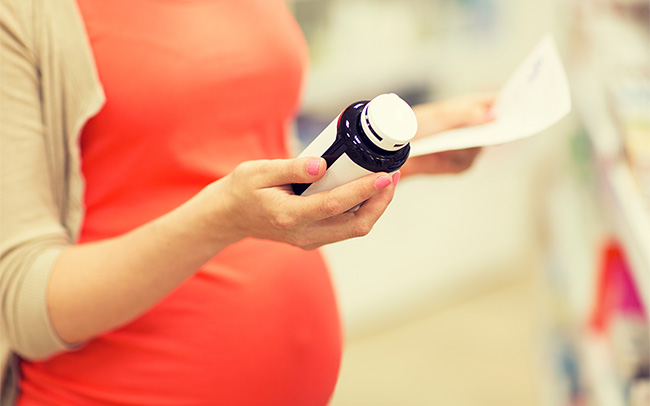
Close up of pregnant woman comparing pill bottle label with information on hand-held notes It is recommended that all women take folic acid and vitamin D supplements during pregnancy. If you have a darker skin, or always cover your skin you may be at higher risk of Vitamin D deficiency. See the related link below for further information. You can buy these over the counter or alternatively ask your GP for a prescription. Folic acid can be stopped when you are 12 weeks pregnant, whereas vitamin D can be taken throughout pregnancy and whilst breastfeeding. Other vitamins are unlikely to be needed if you have a healthy and balanced diet. Some women find that their iron levels drop in pregnancy – you will be offered blood tests to see if you need any iron supplements. If you receive certain benefits you may be entitled to free vitamins from Healthy Start. Sometimes it is necessary to take medication in pregnancy, although this should always be on the specific advice of your midwife or doctor. In some circumstances, certain types of medications are recommended for over the counter purchase rather than requiring a prescription. The types of medications that fall into this category are: Antacids Laxatives Vitamins and minerals Iron supplements Analgesia (painkillers) Moisturisers and steroids Aspirin Treatment for haemorrhoids (piles), thrush, cold sores, dandruff etc. If your healthcare professional recommends that you take such medication you will be advised to see your local pharmacist, who will be able offer further advice and information about the recommended products.

Pre-existing conditions and pregnancy

Pre-existing conditions and pregnancy

Healthcare professional in discussion with pregnant woman It is important to tell your GP, obstetrician and/or midwife about any pre-existing physical or mental health conditions. This also includes any previous surgery (including cosmetic procedures) or any childhood conditions or health problems from which you have now recovered. This information helps the team assess if anything further is needed to keep you and your baby healthy during the pregnancy. If you are under specialist care for your medical condition, it is important that you speak to them and discuss any impact your condition may have on your pregnancy. Ask them for a summary and for this to be written in your antenatal notes. Notes don’t automatically move between maternity units and/or departments, so don’t assume that your midwife or doctor knows what your previous carers have said or recommended. If you would like more information, please use the links below to check the safety of your medication in pregnancy. Conditions we need to know about early (before 12 weeks) include:

Chronic hypertension and other medical conditions that may increase the risk of you developing blood pressure concerns in pregnancy

Women with chronic hypertension and certain medical conditions are at a high risk of developing pre-eclampsia and will be prescribed low dose aspirin from 12 weeks. This includes any one of the following high risk factors:
  • Chronic hypertension (high blood pressure).
  • Pre-eclampsia during a previous pregnancy.
  • Chronic kidney disease, diabetes, or an inflammatory disease, eg, Systemic Lupus Erythematosus (SLE).
Or more than one of the following moderate risk factors:
  • First pregnancy.
  • Maternal age over 40.
  • Last pregnancy was more that 10 years ago.
  • Body Mass Index (BMI) of 35 or more.
  • Family history of pre-eclampsia.
  • Expecting more than one baby in this pregnancy.

Thyroid disease

Hypothyroidism (under active thyroid)

As soon as you are pregnant, it is usually recommended that your Levothyroxine dose is increased by 25-50 mcg daily. You should then also contact your GP to arrange blood tests.

Hyperthyroidism (overactive thyroid)

You must discuss your plans for pregnancy with your endocrinologist to assess your disease status and the safety of the medications you are taking.

Epilepsy

Pregnancy may affect your seizures or the effect of your medication. If you become pregnant without having had a chance to discuss your medication(s), it is recommended that you see your GP or specialist as soon as possible. Prior to this review, keep taking your anti-epileptic medicines as normal. Certain medications may need to be stopped and changed to an alternative before you become pregnant, or as soon as possible if you’re already pregnant, due to the risks they pose to your baby. Some other medications need to be increased. Your doctor will prescribe a higher dose of folic acid supplementation (5mg per day).

Mental health and wellbeing concerns

It is understandable to worry about the effects of some medicines used to treat mental health conditions and concerns, but it is important not to stop taking your medications without speaking to your GP or specialist. This may lead to withdrawal symptoms, especially if stopped abruptly, could cause a recurrence of your symptoms or make your condition worse.

Diabetes

Women with Type 1 and 2 Diabetes should aim to have tight control of their diabetes prior to and throughout the pregnancy to reduce the risk of miscarriage, congenital malformation, stillbirth and neonatal death. Pregnancy typically places higher demand for insulin than normal and so close monitoring and control of diabetes is important.

Crohn’s Disease, Ulcerative Colitis and other forms of Inflammatory Bowel Disease (IBD)

It is important to keep Crohn’s or colitis under control during pregnancy and you should not stop taking any of your medications unless your IBD team has advised you to do so. The risk from most medication is lower than the risk of a flare up.

Pregnancy with a heart condition

Women with known heart conditions need a referral to the specialist maternity services as soon as possible in early pregnancy and ideally would have had some pre-pregnancy counselling before trying for a pregnancy. This is because some heart conditions can increase the risk of complications in pregnancy and some medications may need to be stopped or adjusted. Please do not stop, or change, any medications without medical advice. If you would like more information, please use the link below to check the safety of your medication in pregnancy.

Systemic Lupus Erythematosus (SLE)

SLE is the most common type of Lupus, a chronic auto-immune disease. Symptoms and the extent of disease determine how care is managed before and throughout pregnancy.

After 37 weeks gestation/When expecting labour

After 37 weeks gestation/When expecting labour

Heavily pregnant woman making a mobile phone call Call the maternity unit you are booked at if you have:
  • contractions that are becoming strong and regular in pattern
  • heavy vaginal bleeding (more than a mucus show)
  • a reduction or change in your baby’s movements
  • abdominal pain that is constant
  • water leaking from the vagina, waters breaking
  • feeling unwell or worried something is wrong
  • high fever (temperature over 37.5ºC)
  • diarrhoea and/or vomiting combined with high fever, stomach pain, very dark urine or blood in the stools
  • headache accompanied by bad swelling in the hands, feet or face and/or problems with vision
  • itching on the hands or feet.

After 18-20 weeks gestation

After 18-20 weeks gestation:

Worried-looking woman making a mobile phone call Call your GP or attend your local urgent care centre if:
  • any non-pregnancy related concerns, such as skin concerns or a persistent cough
  • pain or burning on passing urine
  • flare-ups of any pre-existing conditions
  • unusual vaginal discharge or discomfort
  • diarrhoea and/or vomiting for over 48 hours.
Call your maternity triage at the maternity unit you are booked at if you have:
  • vaginal bleeding
  • a reduction or change in your baby’s movements
  • high fever (temperature over 37.5ºC)
  • water leaking from the vagina
  • itching on the hands or feet
  • diarrhoea and/or vomiting combined with high fever, stomach pain, very dark urine or blood in the stools
  • headache accompanied by bad swelling in the hands, feet or face and/or problems with vision
  • moderate/severe abdominal pain that is either constant or comes and goes.

Before 18-20 weeks gestation

Before 18-20 weeks gestation

Close up of women's hands dialing a mumber on a mobile phone Call your GP or attend your local urgent care centre if:
  • you have a high fever (temperature over 37.5ºC degrees)
  • pain or burning on passing urine
  • flare-ups of any pre-existing conditions
  • repeated vomiting or diarrhoea with difficulty in keeping fluids down
  • any non-pregnancy related concerns, such as skin concerns or a persistent cough
  • spotting or light vaginal bleeding.
Call your local Early Pregnancy Unit or attend your Accident & Emergency Department if:
  • you have heavy bright red vaginal bleeding
  • moderate/severe abdominal pain.