Your emotional health during your pregnancy

Your emotional health during your pregnancy

Pregnant woman talking to health professional It is not uncommon for mental health concerns to start during pregnancy, if you have any of the symptoms below at any point, speak to your midwife or doctor as soon as possible. If you are unwell they can arrange treatment to help. What to look out for:
  • feeling low or anxious most of the time, for more than two weeks
  • losing interest in things you normally like
  • having panic attacks
  • feeling worthless or guilty
  • losing your appetite
  • having unpleasant thoughts that keep coming back and you can’t control them
  • finding yourself repeating an action (like washing, checking, counting) to feel better
  • finding your thoughts race and you become extremely energetic and happy
  • feeling you are so afraid of giving birth that you don’t want to go through with it
  • continual thoughts that you are an unfit mother or that you’re not attached to the baby
  • thoughts about self-harm or suicide.
You should also tell your midwife or doctor if you have (or have had) an eating disorder, as you may benefit from additional support to deal with your body’s changes through pregnancy and beyond.
Portal: Mental health and wellbeing in your region

Talking about your emotional health

Talking about your emotional health

Two women sitting together talking and smiling At your booking appointment, your midwife will ask you questions about your mental and physical health so that they can find out whether you need any extra support. Every woman is asked these questions. Even if you don’t have a specific mental health issue, it’s a good idea to talk to your midwife if you’re feeling anxious or feel like you are isolated and/or do not have support. Your midwife will ask you:
  • how you are feeling
  • whether you have or have ever had mental health concerns, such as bipolar affective disorder, schizophrenia or schizoaffective disorder, previous postpartum psychosis, severe depression or other psychotic illness
  • whether you have ever been treated by a specialist mental health service
  • whether a close relative has ever had severe mental illness during pregnancy or after birth.
It’s important to be honest with your midwife about how you feel. They won’t judge you, and they can help you get support or treatment if you need it. If your midwife thinks you need more support after talking to you, they will refer you to the most appropriate service for your needs such as talking therapies, a specialist midwife, specialist perinatal services or your GP.

Perinatal mental health teams

Community perinatal mental health teams support mothers who are experiencing moderate to severe mental health problems.  They also offer pre-conception advice to women with existing mental health problems who are planning a pregnancy. They are staffed by a range of professionals and offer family focused help. These teams work closely with maternity services, health visitors, talking therapies, GPs, other community services and third sector organisations.

Your emotional health and wellbeing in pregnancy

Your emotional health and wellbeing in pregnancy

Expecting a baby can be a joyful and exciting time. However, it is also common for pregnant women to experience anxiety, depression or emotional distress. As many as one in four women experience emotional difficulties during pregnancy. This can happen to anyone, explore the pages below to find out more about your emotional health and wellbeing.

Vitamins and supplements and over the counter medicines

Vitamins and supplements and over the counter medicines

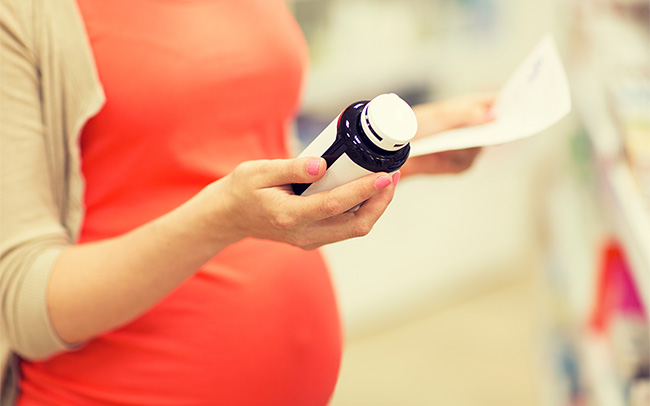
Close up of pregnant woman comparing pill bottle label with information on hand-held notes It is recommended that all women take folic acid and vitamin D supplements during pregnancy. If you have a darker skin, or always cover your skin you may be at higher risk of Vitamin D deficiency. See the related link below for further information. You can buy these over the counter or alternatively ask your GP for a prescription. Folic acid can be stopped when you are 12 weeks pregnant, whereas vitamin D can be taken throughout pregnancy and whilst breastfeeding. Other vitamins are unlikely to be needed if you have a healthy and balanced diet. Some women find that their iron levels drop in pregnancy – you will be offered blood tests to see if you need any iron supplements. If you receive certain benefits you may be entitled to free vitamins from Healthy Start. Sometimes it is necessary to take medication in pregnancy, although this should always be on the specific advice of your midwife or doctor. In some circumstances, certain types of medications are recommended for over the counter purchase rather than requiring a prescription. The types of medications that fall into this category are: Antacids Laxatives Vitamins and minerals Iron supplements Analgesia (painkillers) Moisturisers and steroids Aspirin Treatment for haemorrhoids (piles), thrush, cold sores, dandruff etc. If your healthcare professional recommends that you take such medication you will be advised to see your local pharmacist, who will be able offer further advice and information about the recommended products.