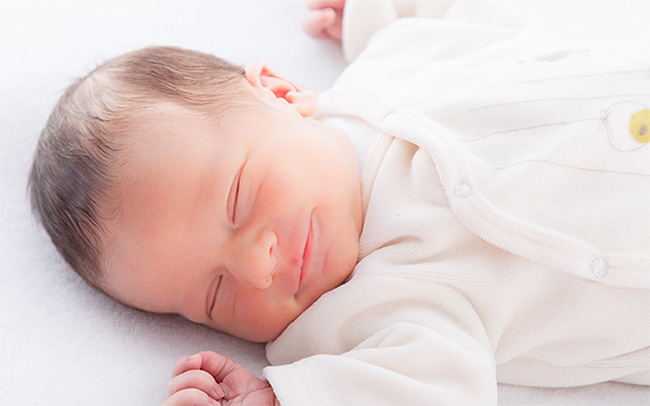
Safe sleeping and reducing the risk of cot death

Safe sleeping and reducing the risk of cot death
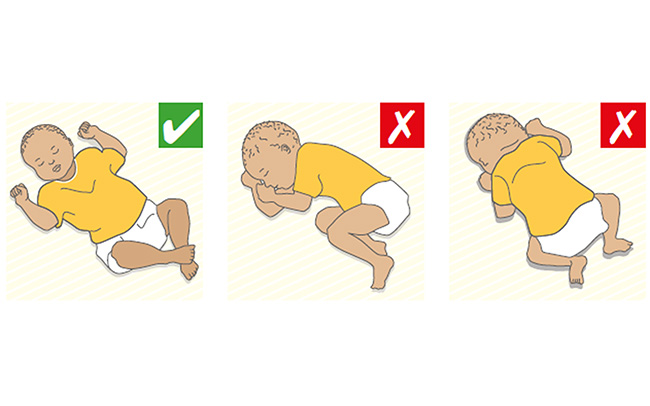
Diagram showing three sleeping babies. One sleeping baby is in the correct position lying on their back and the other two sleeping babies are shown in the incorrect positions of lying on their side and on their front Sudden Infant Death Syndrome (SIDS) is the sudden and unexpected death of a baby where no cause is found. This is rare but it can still happen and there are steps you can take to reduce the risk of this occurring:
  • always place your baby on his/her back to sleep
  • babies should not be swaddled when sleeping
  • place your baby so his/her feet are right at the end of the cot/moses basket, rather than in the middle, to prevent them from sliding underneath covers
  • do not use cot bumpers or quilts, only use sheets and lightweight blankets
  • ensure room temperature is between 16-20°C, as overheating your baby can be dangerous
  • the safest place for your baby to sleep is in a cot or moses basket in the same room as you, for the first six months.
Safer sleep for babies
Sharing a bed with your baby

Sharing a bed with your baby

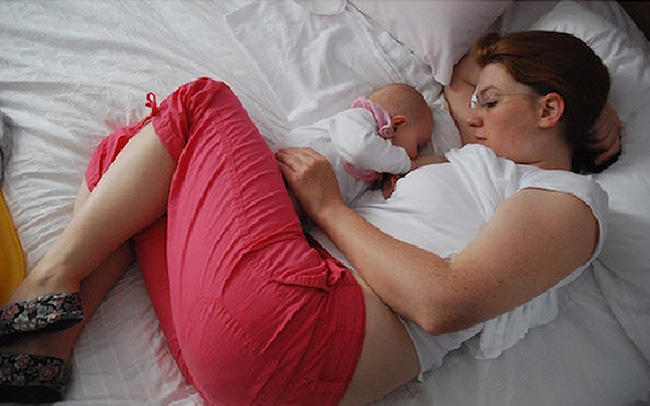
Mother takes a nap on a bed lying on her side with her baby sleeping in the curve of her body There are many things to consider when creating your baby’s sleep space to ensure it is safe. The following links provide detailed information to support your decisions about which is the right choice for your family. It is useful to think which sleep environment you intend for your baby to sleep: a flatbed pushchair, a Moses basket, a cot, or in your bed. There are safety considerations for all of the above environments such as where to lay in the cot/bed and what bedding to use. There are times when it is not recommended that the baby be in your bed.

Key points to remember

Regardless of sleep space the following should be followed:
  • Your baby sleeps in the same room as you for all sleeps for at least the first 6 months.
  • Always place your baby on their back to sleep, not their front or side.
  • The bedding is not able to cover baby’s face and head.
  • The sleep space should in a clear, no toys or bumpers.
  • The mattress should be flat and firm with no raised or cushioned areas.
  • Soft beds, bean bags, pillows, pods, nests, sleep positioners; sagging mattresses are not suitable sleep environments.
  • Avoid the baby becoming too hot, the room environment should be between 16-20°C and head should not be covered with a hat. If the weather is hot, the amount of clothing and bedding will need to be adjusted to avoid overheating.
  • Keep baby’s environment smoke-free before and after birth.
  • Breastfeeding is protective, the more you feed the greater the protection.
  • Never sleep with your baby on a sofa or armchair.
  • If your baby is sleeping flatbed pushchair, Moses basket or cot, place your baby’s feet to the foot end.
If you decide to, or think you may share the bed with your baby, it is important to consider the following points:
  • Keep your baby away from the pillows.
  • Make sure your baby cannot fall out of bed or become trapped between mattress and wall.
  • Make sure the bed clothes cannot cover your baby face or head.
  • Remain with your baby, even very healthy babies can wriggle into a dangerous position if left alone.

When it isn’t safe to share a bed with your baby:

  • It is not safe to bed-share in the early months if your baby was born very small or preterm.
  • Do not sleep with your baby when you have been drinking any alcohol or taking drugs that may cause drowsiness (legal or illegal).
  • Do not sleep with your baby if you or anyone else who shares the room is a smoker.
You can get further information from your midwife or health visitor and read the links below.

What is normal sleep?

What is normal sleep?

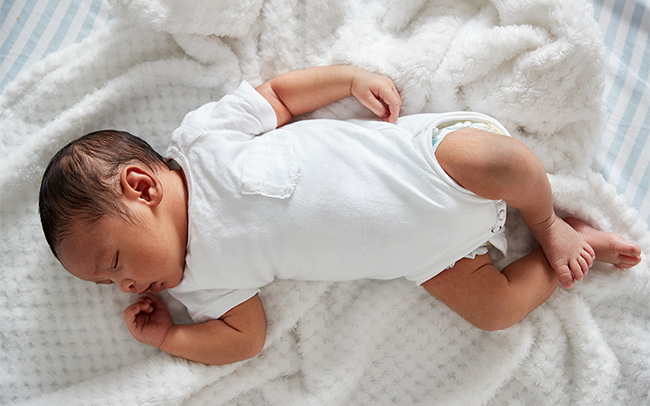
Baby in sleep suit sleeps with legs relaxed and head to one side Your baby will have his/her own pattern of waking and sleeping, and it’s unlikely to be the same as other babies you know. Please note that newborn babies do not need a routine. However, over a course of several months you will have a routine established. Normal sleeping patterns from nought to three months:
  • most newborn babies are asleep more than they are awake
  • their total daily sleep varies, but can be from eight hours up to 16-18 hours
  • babies will wake during the night because they need to feed.