It’s important to remember that scans are another kind of test to help learn more about your baby.Ultrasound is a medical examination requiring the concentration of the sonographer. As such, it is recommended that you leave other small child(ren) at home, unless this is unavoidable.You will normally be offered two scans in pregnancy. The first is known as the dating scan at around 12 weeks of pregnancy and the second (sometimes called the anomaly scan) is performed at around 20 weeks gestation. This second scan will look in detail at your baby’s bones, heart, brain, spine, face, kidneys and stomach.It is important to remember that the scan cannot find everything that could be of concern about your baby. The quality of the images depends on several factors, including body mass index and fibroids.If you wish to know the sex of your baby, you can ask the sonographer, although it isn’t always possible to see clearly.All pregnant women in the UK are offered antenatal screening tests. A screening test in pregnancy cannot give you a yes/no answer as to whether your baby has a condition. It can only tell you what the chances are of your baby being affected. Screening tests in pregnancy include blood tests and ultrasound scans (ultrasound scans can suggest there might be a condition (as in screening for Down’s syndrome) or confirm there is a condition (as in diagnosing spina bifida)).
Results are most often reported as a statistical chance and sometimes the terms “increased chance” or “low chance” will be used.
The terms “risk” and “chance” refer to the possibility of an event happening. For example, a chance of 1 in 100 means that out of 100 women with this result, 1 will have a baby with a syndrome and 99 will not. This is the same as a 1% chance that the baby has a syndrome and a 99% chance that the baby does not.
Most women will be reassured by the results but some (approximately 5%) will be given a result that leads to decisions about diagnostic testing. It is your choice to have any test.
Diagnostic tests such as CVS and Amniocentesis carry a small risk (between 0.5 and 1%) of miscarriage which means the decision about whether to have them can be difficult. Unfortunately, there is no other way of knowing for sure whether your baby has Down’s syndrome and certain other genetic disorders.
A diagnostic test in pregnancy can tell you for definite whether your baby has a condition or not. Diagnostic tests in pregnancy include CVS, amniocentesis and ultrasound scans.
All tests should be fully explained to you by your doctor or midwife before you have them.
The results of your scan will be given to you on the day by the sonographer completing the scan. Most maternity units will provide you with scan pictures at a small cost.
A screening test can find out if you, or your baby, have a high or low chance of having a health problem.Inside the cells of our bodies there are tiny structures called chromosomes. These chromosomes carry the genes that determine how we develop. You will be offered a screening test to see how likely it is that your baby will have an abnormality in their chromosomes (Down’s, Edwards’ or Patau’s syndrome).This test can be performed between 11 and 20 weeks and involves you having an ultrasound scan and a blood test. These tests are time critical, so it is very important that you attend for your scheduled appointment. If you are unable to attend contact the ultrasound department to rearrange as soon as possible. There are several different screening options available, so it is worth researching this early on or asking your midwife for more information.You will be contacted by the maternity unit if the results come back showing a high chance of having one of the above chromosomal conditions. You do not have to have any testing if you don’t want to.Non-invasive Prenatal Testing (NIPT) can be offered to women who receive a higher chance result from a combined or quadruple test. A higher chance result is a level of up to 1 in 150. A lower chance result is 1 in 151 and higher.NIPT cannot be offered and performed when a pregnant woman has:
cancer, unless in remission
received a blood transfusion in the previous 4 months
had bone marrow or organ surgery
immunotherapy in current pregnancy, excluding intravenous immunoglobulin (IVIg) treatment
had stem cell therapy
a vanished twin pregnancy
Down’s syndrome, or balanced translocation or mosaicism of Down’s syndrome, Edwards’ syndrome or Patau’s syndrome (genetic material)
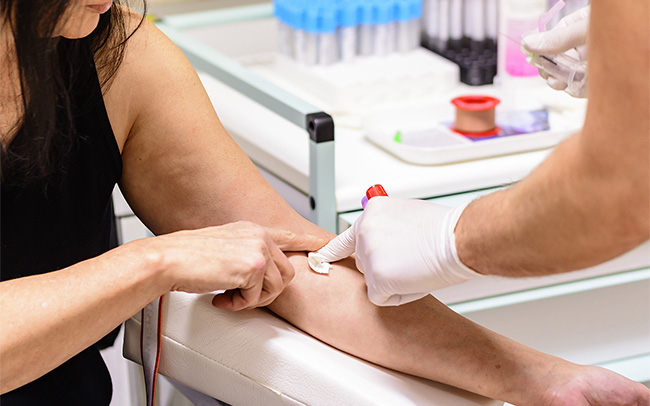
At the first booking appointment your midwife will recommend blood tests for Hepatitis B, HIV, syphilis, full blood count, blood group and electrophoresis (sickle cell and thalassemia screening). Some maternity units may also check your blood glucose levels. You may need a blood test for glucose tolerance later in pregnancy to screen for a condition called gestational diabetes. Your full blood count will be taken again later in pregnancy to ensure your iron levels remain normal.If your blood group is rhesus D negative, you may be offered a special blood test around 16 weeks of pregnancy. Where this test is not available, you will be offered an injection of Anti-D during pregnancy. Around 15% of women are rhesus negative.Small amounts of the unborn baby’s DNA are present in the mother’s blood. By isolating the baby’s DNA it is now possible to determine the unborn baby’s blood group. If the baby is predicted to be rhesus D negative then the mother will not require any prophylactic (preventative) Anti-D in this pregnancy before or after the birth. Paired samples (cord blood and mother’s blood) will be checked after birth to confirm the baby’s blood group.If the baby is predicted to be Rhesus D positive, or the result is inconclusive, you will be offered routine Anti-D prophylaxis at 28 weeks gestation and following any sensitising event, such as a fall, vaginal bleed or road traffic accident. Speak to your midwife or doctor for more information.It’s useful to know your blood group in case you need to be given blood – for example, if you have heavy bleeding (haemorrhage) during pregnancy or after birth.
Anaemia (low iron)
Anaemia makes you tired and less able to cope with loss of blood when you give birth.You should be offered screening for anaemia at your booking appointment and again at 28 weeks.If tests show you’re anaemic, you’ll probably be offered iron and folic acid.
Sickle cell and thalassaemia testing
As mentioned above, a blood test is taken to find out if you carry thalassaemia in your genes. Depending on the hospital where you are booked you may also be offered a blood test to find out if you carry a gene for sickle cell. Sickle cell and thalassaemia affect the way oxygen is carried around our body.You do not catch or develop sickle cell or thalassaemia – you are born with it. These are conditions that we can inherit from our parents.If you inherit sickle cell or thalassaemia from one parent you are called a ‘healthy carrier’. During pregnancy you may find out find that you are a healthy carrier. Some families know they have sickle cell or thalassaemia in their family’s genetic makeup and get tested prior to pregnancy. If you inherit sickle cell or thalassaemia from both parents you will have the condition and will need lifelong specialist care.If your test result shows you are a ‘healthy carrier’ you will be contacted by the maternity screening team to explain the result and offer testing to the father of your baby.Below are links to further information about sickle cell and thalassaemia:Information for fathersScreening tests for you and your baby sickle cell and thalassaemiaSickle cell carrierThalassaemia carrierAlpha Zero ThalassaemiaHaemoglobin C carrierHaemoglobin Lepore carrierHaemoglobin O Arab carrierHaemoglobin Delta Beta Thalassaemia carrierHaemoglobin D carrierHaemoglobin E carrier
During pregnancy you will be offered several screening tests to try and find any health problems that could affect you or your baby. It is your decision whether or not to have any of these tests. Read the “Screening tests for you and your baby” booklet from the link at the end of this page. It is important to look through the booklet before your first meeting with your midwife as it contains important information about your screening choices. The booklet is available in different languages.

 It’s important to remember that scans are another kind of test to help learn more about your baby.
Ultrasound is a medical examination requiring the concentration of the sonographer. As such, it is recommended that you leave other small child(ren) at home, unless this is unavoidable.
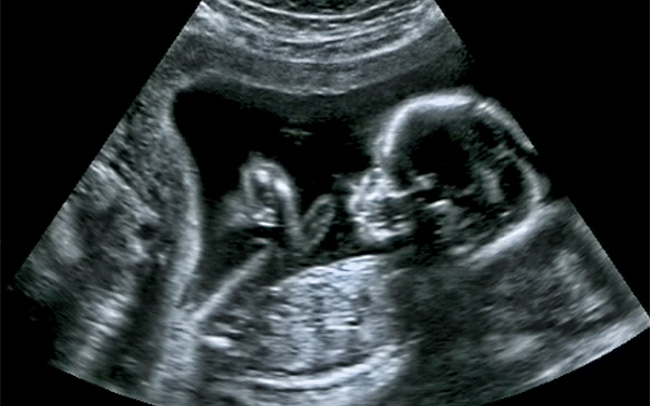
You will normally be offered two scans in pregnancy. The first is known as the dating scan at around 12 weeks of pregnancy and the second (sometimes called the anomaly scan) is performed at around 20 weeks gestation. This second scan will look in detail at your baby’s bones, heart, brain, spine, face, kidneys and stomach.
It is important to remember that the scan cannot find everything that could be of concern about your baby. The quality of the images depends on several factors, including body mass index and fibroids.
If you wish to know the sex of your baby, you can ask the sonographer, although it isn’t always possible to see clearly.
All pregnant women in the UK are offered antenatal screening tests. A screening test in pregnancy cannot give you a yes/no answer as to whether your baby has a condition. It can only tell you what the chances are of your baby being affected. Screening tests in pregnancy include blood tests and ultrasound scans (ultrasound scans can suggest there might be a condition (as in screening for Down’s syndrome) or confirm there is a condition (as in diagnosing spina bifida)).
It’s important to remember that scans are another kind of test to help learn more about your baby.
Ultrasound is a medical examination requiring the concentration of the sonographer. As such, it is recommended that you leave other small child(ren) at home, unless this is unavoidable.
You will normally be offered two scans in pregnancy. The first is known as the dating scan at around 12 weeks of pregnancy and the second (sometimes called the anomaly scan) is performed at around 20 weeks gestation. This second scan will look in detail at your baby’s bones, heart, brain, spine, face, kidneys and stomach.
It is important to remember that the scan cannot find everything that could be of concern about your baby. The quality of the images depends on several factors, including body mass index and fibroids.
If you wish to know the sex of your baby, you can ask the sonographer, although it isn’t always possible to see clearly.
All pregnant women in the UK are offered antenatal screening tests. A screening test in pregnancy cannot give you a yes/no answer as to whether your baby has a condition. It can only tell you what the chances are of your baby being affected. Screening tests in pregnancy include blood tests and ultrasound scans (ultrasound scans can suggest there might be a condition (as in screening for Down’s syndrome) or confirm there is a condition (as in diagnosing spina bifida)).