Soon after birth, your midwife will offer to give your baby vitamin K by either injection (once only) or oral drops (which are given in three doses). This is to prevent a rare but serious blood disorder, and can be given by injection or oral drops. If you opt for oral drops your baby will need to receive further doses. The decision to have oral doses may impact on future treatments until all three doses are received, for example, release of tongue tie.
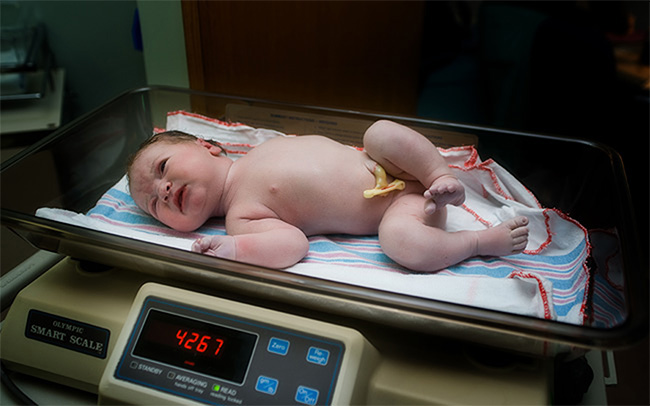
During skin-to-skin contact with your baby, he or she may show early feeding cues. Your midwife will support you in feeding your baby shortly after birth. Some babies want to feed very soon after birth, whereas others take several hours to show signs that they are ready to feed.Some babies are alert after the birth, whilst others may become sleepy. When holding your baby ensure that their nose and mouth remains unobstructed by your body, towels or clothing.Your baby’s weight will be checked, and a midwife or neonatal doctor will check him/her from top-to-toe to exclude any major abnormalities. Your baby will be offered a supplement of Vitamin K.In some rare cases, your baby may need to be transferred to the neonatal unit for a period of time for specialised treatment. This is more common with babies born prematurely, very small, with an infection or through a particularly complicated birth. If this happens to you, you will have plenty of support and help from your maternity team.
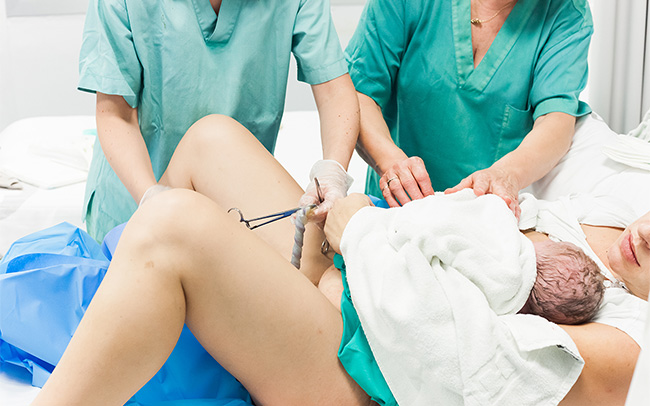
After your placenta has been delivered, your midwife or doctor will ask to check and see if you have any tears to the perineum and/or vagina that might require stitches. If you do need stitches, your midwife or doctor will explain this to you.Before stitching your midwife or doctor will ensure the area is numbed with local anaesthetic, or if you have an epidural already, this will be topped up. Most tears will be repaired in your birthing room, more significant tears require repair in an operating theatre. Tears are repaired using dissolvable stitches and normally heal within a month of birth.All women will lose some blood after giving birth, this happens because the area of the womb where the placenta was attached takes time to heal. Bleeding may be heavy immediately after the birth, but will reduce significantly over the next few days and weeks. Bleeding will normally last between two and six weeks. Your midwife will check on your bleeding regularly straight after birth.If there is significant bleeding this is called a postpartum haemorrhage (PPH). Your midwife and doctor will take prompt action to stop ongoing blood loss.
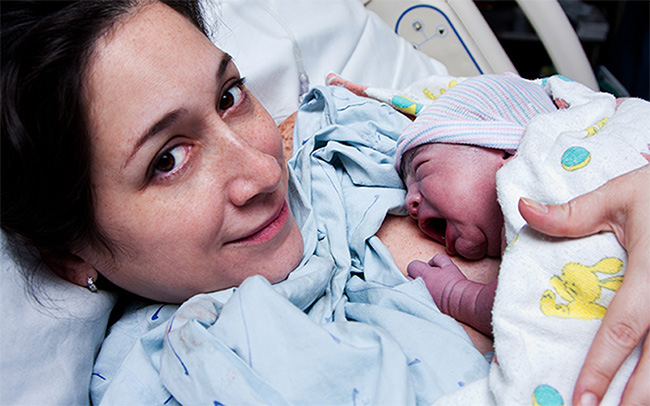
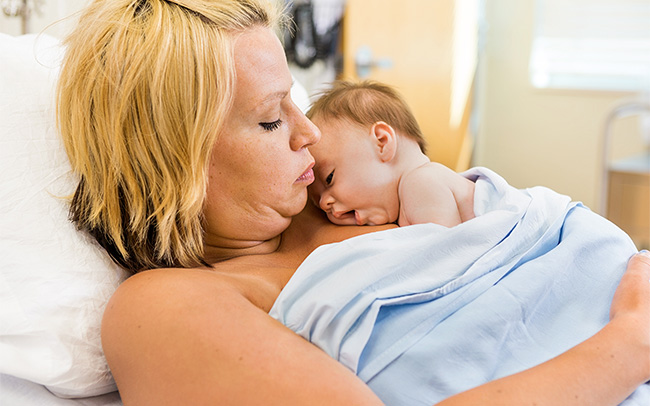
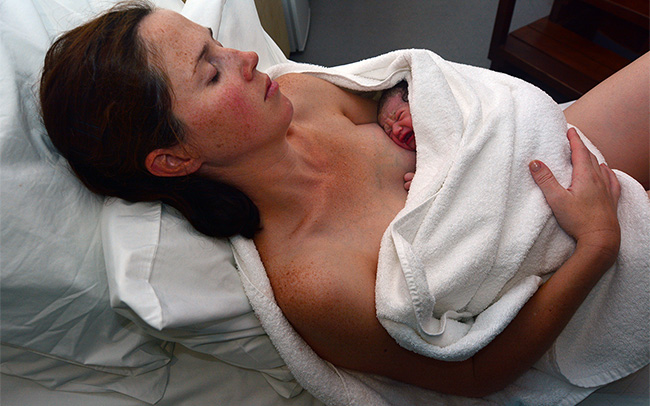
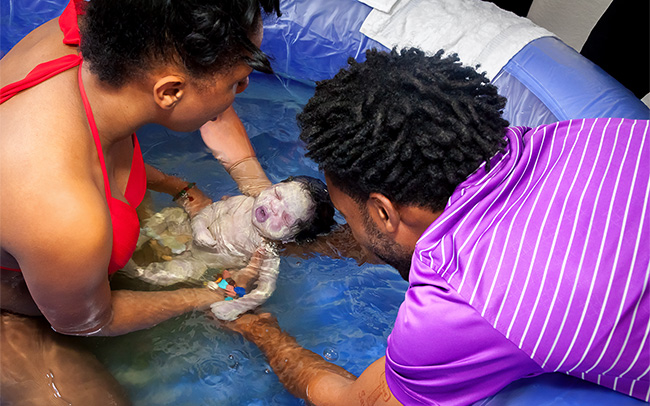
After your baby is born, so long as they are well, you will be encouraged to have immediate skin-to-skin contact. This type of contact is known to be beneficial to both mother and baby by:
regulating your baby’s breathing, heart rate, temperature and blood glucose levels
soothing and calming your baby
encouraging early breastfeeding and increased milk production
supporting longer term breastfeeding success.
If, for any reason you are not well enough to have skin-to-skin contact with your baby, your partner can do so instead.Even if your baby needs help with breathing after birth, or to be seen by a neonatal doctor, you will be offered skin-to-skin contact as soon as practically possible. It is very important that your baby’s chin is free from obstruction and that a clear airway is maintained.Read the important safety considerations in the UNICEF Baby Friendly Initiative related link below.
Meeting your baby for the first time can cause many different emotions in new parents. After months of build up to the birth, you may feel elation and an instant rush of love but don’t be concerned if you initially feel dazed and disconnected, or have concerns over whether the baby is alright. Making an emotional connection with your baby can take time. It is important to remember that there is no right or wrong way to feel about your newborn and that for some parents it can take quite a while to adjust to the fact that labour is over and their new baby has arrived.
Around 15% of babies are born by emergency caesarean section, either during pregnancy or labour. You may need an emergency caesarean section if:
your baby’s head is too big for your pelvis, or in the wrong position
your labour doesn’t move on, your contractions are weak, and your cervix hasn’t opened enough
your baby is distressed, and labour hasn’t gone far enough for you to have a safe forceps or ventouse delivery
you develop a serious illness, such as heart disease or very high blood pressure
for some other reason your baby needs to be born quickly, for example because of placental abruption (where the placenta separates too soon).
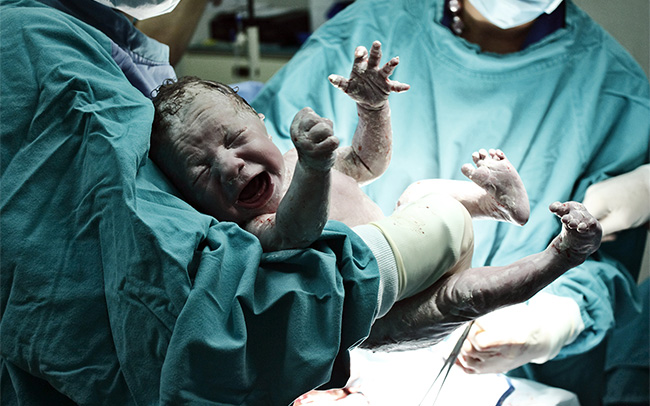
Most women will have an epidural or spinal anaesthetic to ensure they do not feel the operation, however in some cases where the pain relief isn’t adequate, or there isn’t enough time to put the spinal in, a general anaesthetic might be advised.The obstetrician will make a 10 to 15cm cut at the bottom of your abdomen, just at the top of your pubic hairline, which is big enough to deliver your baby through, then a cut through your womb to reach your baby, usually after a delay of one minute. You may feel some tugging when your baby’s lifted out – sometimes this is done by hand and sometimes with a pair of forceps.Your baby will have have their umbilical cord clamped and cut, be quickly checked over by the baby doctor, and if everything is well they’ll be passed to you or your partner, so you can hold them and have skin-to-skin contact. The placenta and membranes are delivered then the cut in your womb and abdomen are closed with stitches.It normally takes about 10 minutes to deliver your baby, and 30 to 40 minutes to complete the stitches.There are some associated risks with caesarean section delivery, for both you and your baby and your team will discuss these risks with you prior to the surgery.Recovery from emergency caesarean is the same as recovery from a planned caesarean.
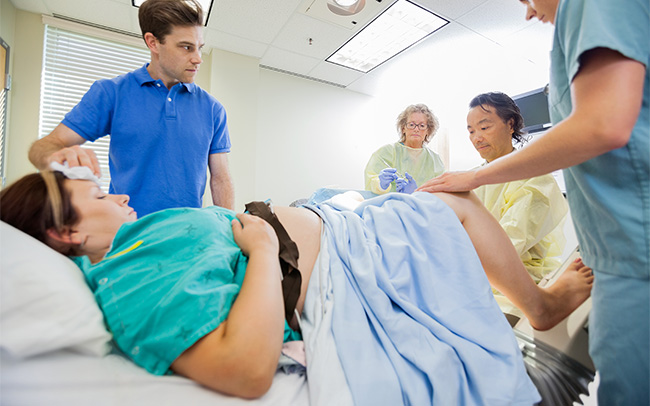
In some cases your doctor may recommend assisting the birth of your baby by using either a ventouse or forceps.This may occur where the second stage of labour (the pushing stage) is longer than expected, where your baby’s head is not in the best position to come through the birth canal or if there are changes to his/her heartbeat meaning that birth needs to happen as soon as possible.A ventouse is a metal or plastic suction cup that is placed on your baby’s head.Forceps are curved metal tongs that are placed around your baby’s head.You will be offered pain relief for an assisted vaginal birth, with either local anaesthetic or an epidural. The birth will be managed by your doctor. Your midwife will be present to help and support you.Your doctor will gently pull using the ventouse or forceps whilst you push during your contractions. Sometimes several pulls are needed, or if one method doesn’t work, the other may be tried. You are more likely to need an episiotomy, particularly if forceps are used.In rare circumstances, if neither ventouse or forceps successfully deliver your baby, a caesarean birth might be recommended.
An episiotomy is a cut that is made (with your consent) to the perineum (the area between your vagina and your rectum) to assist in the birth of your baby.
Your midwife or doctor may recommend this if:
your baby’s heartbeat suggests that he or she needs to be born as quickly as possible.
if you are having an assisted birth; or
if there is a high risk of a serious tear affecting your rectum. An episiotomy is repaired using dissolvable stitches and normally heals within a month of birth.
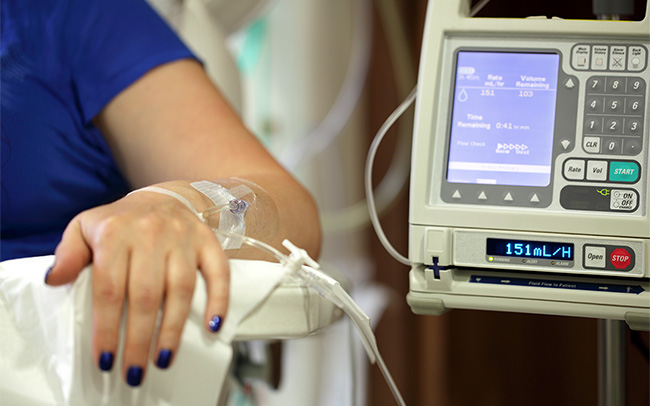
Oxytocin is the naturally occurring hormone that causes your womb to have contractions.If your contractions slow down, or are not effective in causing the cervix to dilate, it may be recommended that you have a synthetic oxytocin drip which is given in small amounts directly into a vein via a cannula. Oxytocin makes contractions stronger and more regular. If you have an oxytocin drip, close monitoring of you and your baby (using continuous electronic fetal monitoring, sometimes called cardiotocograph or CTG) is recommended.

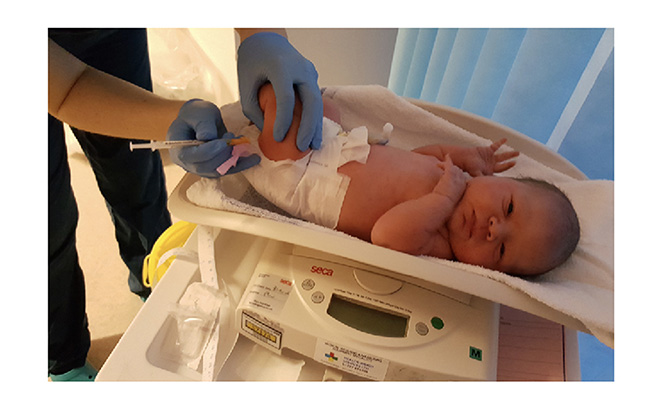 Soon after birth, your midwife will offer to give your baby vitamin K by either injection (once only) or oral drops (which are given in three doses). This is to prevent a rare but serious blood disorder, and can be given by injection or oral drops. If you opt for oral drops your baby will need to receive further doses. The decision to have oral doses may impact on future treatments until all three doses are received, for example, release of tongue tie.