If you are travelling to countries that require specific vaccinations please speak to your practice nurse. Some vaccines that use live bacteria or viruses are not recommended during pregnancy because of concerns they could harm the baby in the womb. Inactivated vaccines are safe in pregnancy.
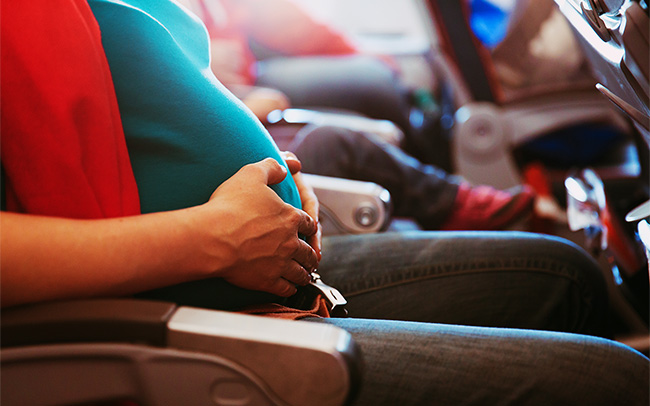
Flying is not harmful to you or your baby, but it is important to discuss your pregnancy with your midwife or doctor before travelling by plane.The likelihood of going into labour is higher after 37 weeks and some airlines will not let you fly towards the end of pregnancy. Check with the airline directly about this. After week 28 of pregnancy, the airline may ask for a letter from your GP confirming your due date, and that you aren’t at risk of complications.Long-distance travel carries a small risk of blood clots (known as deep vein thrombosis or DVT). Discuss any long-haul travel with your doctor as you may require DVT preventative medication, particularly if you have other risk factors. When in the air, drink plenty of water and move around the cabin regularly. You can buy a pair of compression stockings from a pharmacy, which will help reduce the risk of DVT.
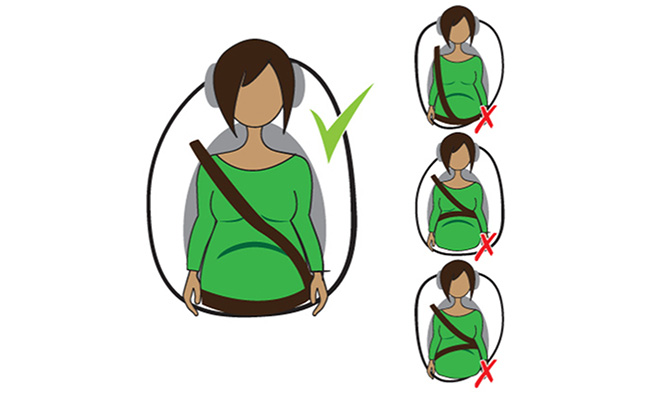
On long car journeys it is important to stop regularly for a break and to stretch your legs. Wear your seatbelt with the cross strap between your breasts and the lap strap across your pelvis under your bump, not across your bump. Road accidents are among the most common causes of injury in pregnant women. Avoid making long trips on your own and share the driving with others when possible.
Riding a bicycle in pregnancy should be approached with caution, due to the risk of falling which may harm you or your baby. In pregnancy your joints are less stable, your centre of gravity is altered and your reactions are slower. It might be best to avoid cycling unless you are used to cycling regularly.
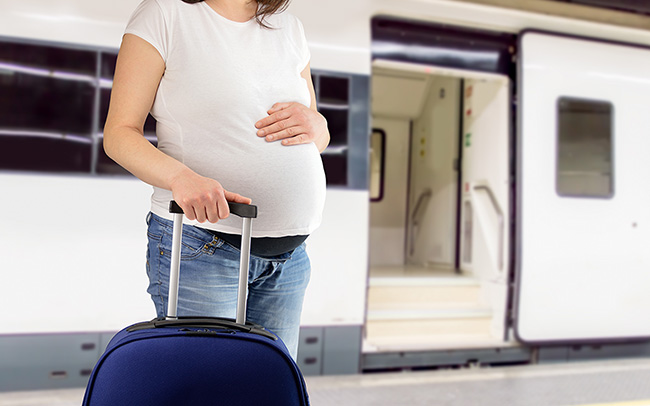
Travelling by tube, train and bus during pregnancy can be tricky, but ordering a free Baby on board! badge can help make it easier. Always travel with a bottle of water and sit down when possible.
Always take your hand held maternity notes with you if travelling away from home. If travelling far from home in the middle/later stages of pregnancy, it may be worthwhile looking up the local maternity unit in case you need any urgent care whilst away.

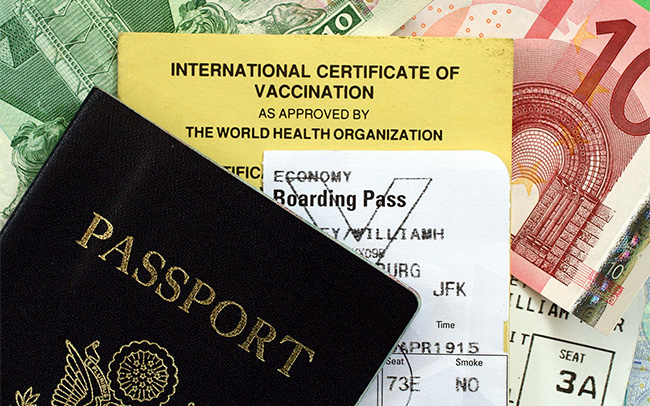 If you are travelling to countries that require specific vaccinations please speak to your practice nurse. Some vaccines that use live bacteria or viruses are not recommended during pregnancy because of concerns they could harm the baby in the womb. Inactivated vaccines are safe in pregnancy.