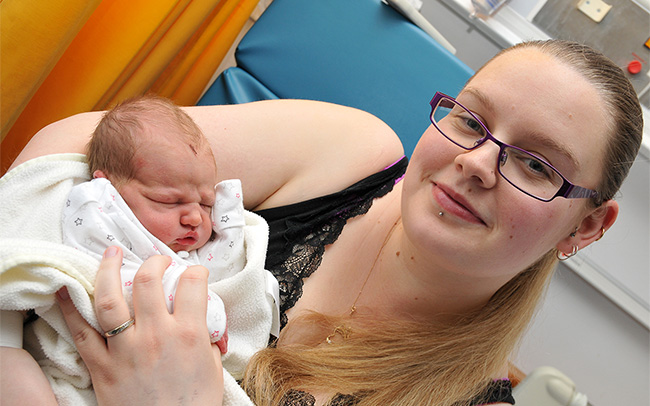
Recovery from caesarean birth

Recovery from caesarean birth

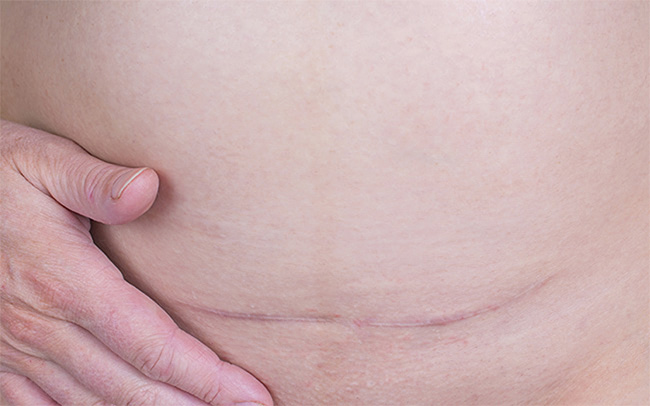
Close up of woman's tummy showing a caesarean scar Following a caesarean you may feel sore and swollen for a few days. To help with pain, regular pain relief is recommended in combination with early and gentle movement. Always wash your hands before caring for your caesarean wound. Your scar will take up to six weeks to heal, and to assist with healing you should:
  • look out for any signs of infection such as severe pain, parting of the wound, redness, oozing of pus and bleeding
  • bath or shower daily and clean your incision site gently with warm water and pat dry
  • keep the scar dry and exposed to the air when possible
  • wear loose, comfortable clothing and cotton underwear
  • avoid lifting anything heavier than your baby.
Gentle activity such as a daily walk is recommended to prevent the formation of blood clots. Advice on resuming exercise can be found elsewhere in this section.

Perineal after-care

Perineal after-care

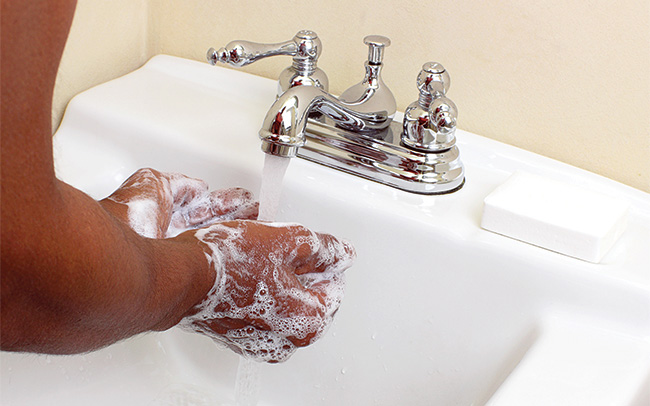
Close up of hands covered in soap lather being rinsed under a running tap
  • Always wash your hands before caring for your stitches or changing your sanitary towels. This is particularly important if anyone in your household has a cough or cold
  • Shower or bath daily, if possible, for the first two weeks. Prolonged bathing can cause the stitches to dissolve too quickly. Rinse with warm water and avoid soaps and perfumed products. Dry with a clean towel and avoid rubbing the area
  • Do not apply any creams, salts, oils or lotions to the stitches
  • Sanitary towels should be changed frequently, and leaving the stitches exposed to the air can assist with healing
  • When passing urine, some mild stinging can be expected in the first few days. Avoid dehydration which can worsen this sensation. Rinsing with plain water during or after urination may reduce this discomfort
  • When opening your bowels the stitches won’t come apart. Avoid constipation or excessive straining and ensure good personal hygiene is maintained to reduce the risk of infection
  • Mild/moderate discomfort is to be expected in the first few days after birth and can be relieved with common pain relief medications such as paracetamol and/or ibuprofen. Please speak to your midwife regarding the recommended dose and other methods to relieve discomfort of your stitches
  • Using ice can reduce inflammation and pain. You can use ice wrapped in a clean towel or use a sanitary pad that has been placed in the freezer for couple of hours. Place over the tender part of your perineum for 10 minutes. Repeat the process three to four times each day for the first few days
  • If your stitches are gaping, oozing, severely painful, offensive in smell or unusually hot, please contact your GP, midwife or local maternity triage/assessment unit urgently.
Recovering from tearing

Intrahepatic cholestasis of pregnancy (obstetric cholestasis) after birth

Intrahepatic cholestasis of pregnancy (obstetric cholestasis) after birth

Close up of a pair of bare feet with a hand scratching an itchy rash on the sole of one of the feet Intrahepatic cholestasis usually gets better after birth.  Rarely, women may have persistently elevated liver enzymes after birth which may indicate a separate underlying liver problem, requiring investigation by your GP in conjunction with a liver specialist. Your GP should check that your liver function has returned to normal at your six week postnatal check. There is a high chance that intrahepatic cholestasis may happen again in a future pregnancy. Up to 90 per cent of women who have had intrahepatic cholestasis will develop it again in future pregnancies. If you have had intrahepatic cholestasis in your pregnancy, it is recommended to have your liver function checked before taking a hormone based contraceptive. For more information see the related link below ‘ICP and contraception advice’.

Gestational diabetes after birth

Gestational diabetes after birth

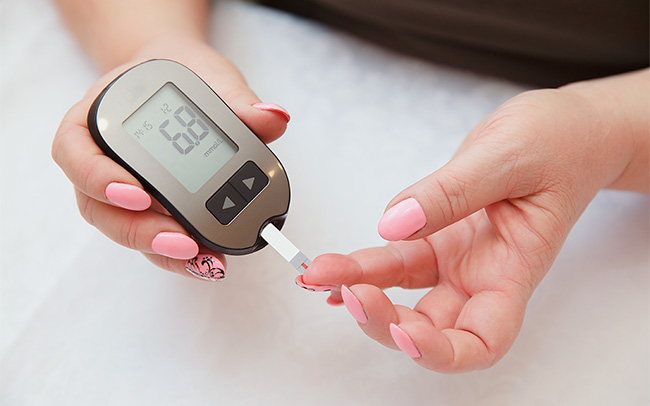
Close up of woman taking a blood sugar fingerprick test If you had diabetes before becoming pregnant, you should refer back to your diabetes team for appropriate advice about managing your blood sugars following your baby’s birth. If you have had gestational diabetes, any medication you have been taking in pregnancy to control your blood sugars can usually be stopped after the birth. Your maternity team may check your blood sugars to ensure they are returning to normal prior to you going home from your maternity unit. You do not need to check your blood sugars once home unless you’ve been told to do so. It is important that you arrange to have a blood test at your GP practice to exclude continued problems with your blood sugar between six and 13 weeks after the birth. Your GP should offer to repeat this blood test every year thereafter, as women who have had gestational diabetes are more likely to be diagnosed with diabetes later in life than those who have not. Research suggests that breastfeeding your baby for more than 3 months may delay the onset of diabetes in the future, or reduce your chance of developing it at all. You can ask your midwife for support with feeding if you need it. After you have had gestational diabetes once, the chance is higher that you will have it again in any future pregnancy, therefore it is important to plan your pregnancy and ensure you have access to maternity care early on. Babies born to mothers with gestational diabetes are at a higher risk of obesity and type 2 diabetes later in life. Use the lifestyle information gained during your pregnancy to make healthy life choices for your whole family and the future.
Portal: Gestational diabetes (Related link)

Pre-eclampsia (PET) after birth

Pre-eclampsia (PET) after birth

Medic takes woman's blood pressure reading Most women who are diagnosed with pre-eclampsia [PET] had normal blood pressure and no protein in their urine before pregnancy. By six weeks after birth, your blood pressure and protein urinary levels will have usually returned to normal. However, a few women may need tablets to control their blood pressure on a long-term basis, this is one of the reasons that it is important to measure your blood pressure in the weeks after birth. Women who have had PET are more likely than other women to have it again in a future pregnancy, and thus you should seek advice about how to manage this, either at the eight week GP postnatal check, or at a pre-pregnancy appointment. The occurance of hypertension during pregnancy is known to predispose women to hypertension in the future. According to the National Institute for Health and Care Excellence, based on your diagnosis of hypertension during this pregnancy, there is an approximate 1 in 5 risk of hypertension during future pregnancies. There is also an increased risk that you may develop hypertension or cardiac disease in later life. Please be reassured that you can help reduce this risk by maintaining a healthy lifestyle and body weight and avoid smoking. Please consult your General Practitioner or specialist to see how you can reduce your future risks. If you are known to have chronic hypertension you have:
  • 17% (1 in 7 women) risk of pre-eclampsia in a future pregnancy
  • 1.7 times increased risk of a major adverse cardiac event in later life
  • 1.8 times increased risk of a stroke in later life
If you have pre-eclampsia you have:
  • 20% (1 in 5 women) risk of any hypertension in a future pregnancy
Of these: Up to 16% (1 in 6 women) risk of pre-eclampsia in a future pregnancy: – if this birth was at 28-34 weeks, this is increased to 33% (1 in 3 women) – if this birth was at 34-37 weeks, this is increased to 23% (1 in 4 women) 6-12% (up to 1 in 8 women) risk of gestational hypertension in a future pregnancy
  • 2% (up 1 to 50 women) chance of developing chronic hypertension
  • 1.5-3 times increased risk of a major adverse cardiac event in later life
  • 2 times increased risk of a cardiovascular mortality in later life
  • 2-3 times increased risk of a stroke in later life
  • 2-5 times increased risk of developing hypertension
If you have gestational hypertension (high blood pressure with no protein in the urine) you have:
  • 22% (1 in 5 women) risk of any hypertension in a future pregnancy
Of these: 7% (1 in 14 women)risk of pre-eclampsia in a future pregnancy 11-15% (up to 1 in 7 women) risk of gestational hypertension in a future pregnancy
  • 3% (up 1 to 50 women)chance of developing chronic hypertension
  • 1.5-3 times increased risk of a major adverse cardiac event in later life
  • 2 times increased risk of a cardiovascular mortality in later life
  • 2-4 times increased risk of developing hypertension
  • Potential increased risk of a stroke in later life

Pregnancy conditions affecting you after birth

Pregnancy conditions affecting you after birth

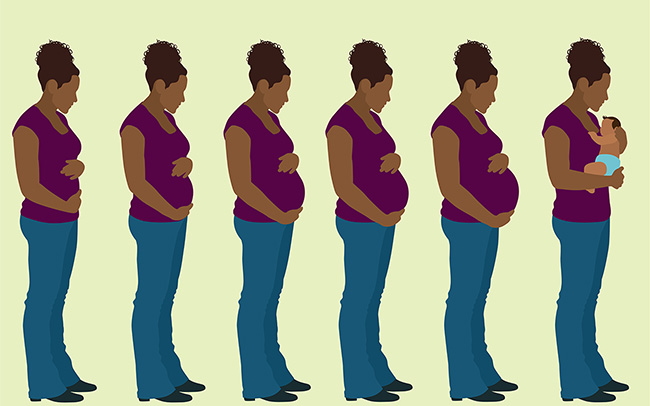
Graphic of a profile of the same woman shown five times in different stages of pregnancy and then shown with a baby in her arms Some of the medical conditions that occur in pregnancy can have an impact on your pregnancy, but also your future health and wellbeing. If you have experienced any of these conditions, please take some time to read this information.

Air travel with your baby

Air travel with your baby

Mother in airline seat with baby facing her in baby airline seat

Some things to consider before you plan to fly with your new baby:

Immunisations:

Whilst airlines may accept babies older than seven days old for travel, be aware that newborn babies are still developing their immune system and so are at risk of picking up infectious diseases. If possible consider having your baby’s first immunisations administered before you travel.

In-flight cabin pressure changes and babies’ ears:

During take-offs and landings, changes in cabin pressure can briefly affect the middle ear pressure and trigger severe ear pain. To reduce the chances of your baby getting pain, encourage your baby to feed, or suck on a pacifier during take-offs and landings.

Before booking:

If you are traveling abroad, you will need a passport/visa for your baby. Check individual airline websites for specifications on travelling with an infant.

Birth registration

Birth registration

Mother holds baby while sitting in a hospital chair Following the arrival of your baby, the birth needs to be registered within 42 days (six weeks) at your local registry office. It is through this process that you will obtain a birth certificate. The registration should be done in the borough you gave birth in. You may register the birth in a different area if this is more convenient, however your details will need to be sent to the borough in which you gave birth in order for them to generate a valid birth certificate. The service is normally provided by appointment only, but this may vary from one area to the next. Please take the Personal Child Health Record (red book) and your baby’s NHS number with you, as the registrar may ask to see it.
Portal: Birth registration for your region

The Personal Child Health Record Book (the red book)

The Personal Child Health Record Book (the red book)

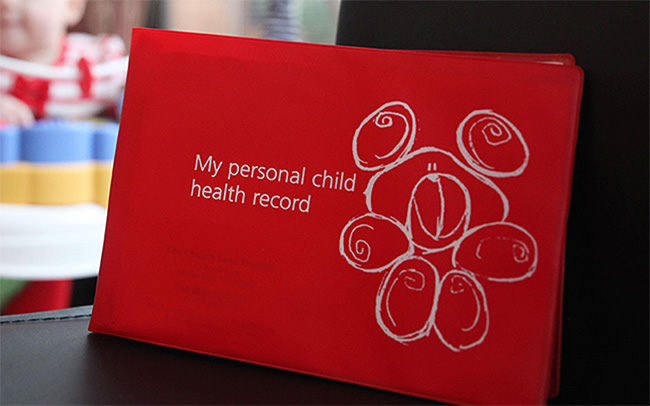
Cover of the personal child health record book The Personal Child Health Record, or the red book as it is often called because of its red cover, is the main record of your child’s health, growth and development from birth and through the early years. You will be given your baby’s red book either in hospital or by your health visitor. You may be given individual sheets to put in the red book, please keep these sheets safe until you are able to add them to the book. The red book provides guidance on screening tests, immunisation schedule, normal development and help and advice on looking after your child. Helpful tips on how to protect your child from passive smoking and how to tackle problems like constipation, crying, fever, fits, spots, rashes, sunburn and other common complaints are included. Keep the red book safe and take it to all baby appointments. For the best long-term outcome for your child, you, and the people involved in caring for your child, it is recommended that you write down every item of relevant information in this book. An electronic version of the red book is gradually being rolled out across the UK. You can see your child’s NHS records, and read important guidance from the NHS and other sources. In time, the eRedbook becomes a virtual keepsake that contains not only health information (such as immunisations and screening results) but also photos, notes and other information about your child. Find out more and to register for it: