
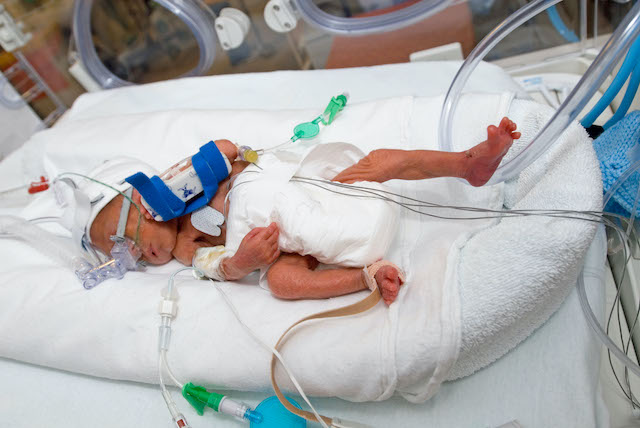
Helping your premature baby to develop
 Having a premature baby is the beginning of a long and emotional journey towards going home. It can be a very stressful time for your whole family. A premature baby’s development happens in the same order as it would have happened in your womb. When your baby reaches certain health, growth and development milestones, you’ll be able to take them.
All babies are different, and their behaviour and development are different too. In premature babies, the differences have to do with how premature they were when they were born.
Below are some changes that you can expect and watch out for in your premature baby and what you can do to help their development.
Having a premature baby is the beginning of a long and emotional journey towards going home. It can be a very stressful time for your whole family. A premature baby’s development happens in the same order as it would have happened in your womb. When your baby reaches certain health, growth and development milestones, you’ll be able to take them.
All babies are different, and their behaviour and development are different too. In premature babies, the differences have to do with how premature they were when they were born.
Below are some changes that you can expect and watch out for in your premature baby and what you can do to help their development.
|
23 to 27 weeks gestation |
|
| Weeks of gestation/Cues | What you can do to help |
|---|---|
| 23 weeks: Eyes are closed. Little movement. | Ask your baby’s nurse to show you how you can touch your baby. Familiarise yourself with the BLISS family handbook. |
| 24 weeks: Your baby’s skin is very thin and transparent. | Talk quietly to your baby as they can hear you. |
| 25 weeks: Your baby’s body is lean with no fat. His/hers arms and legs are limp. Your baby doesn’t yet have good muscle tone. | Ask your baby’s nurse about how to hold and position your baby. Leave a small piece of cloth that smells of you with your baby. |
| 26 weeks: Your baby’s eyes will start to open but they can’t focus yet. Your baby will sleep a lot. The breath triggering part of your baby’s brain hasn’t fully developed yet, so pauses between breaths are common. | Keep the lights as dim as possible. Shield your baby’s eyes from bright light to enable your baby to try and open their eyes. |
| 27 weeks: Your baby may startle at loud noises. | Avoid sudden noises. Remember positioning. |
|
28 to 32 weeks gestation |
|
| Weeks of gestation/Cues | What you can do to help |
|---|---|
| 28 weeks: Your baby’s movements may be jerky and jittery. Their hand grasp and sucking reflexes appear but these will be weak. | Ask the nurse about skin to skin contact (kangaroo mother care). Let your baby gently hold your finger. Your baby may take a non-nutritive tool. |
| 29 weeks: The ability to hear and smell will allow your baby to recognise you. | Talk softly to your baby when you visit. You may like to read short stories, nursery rhymes or sing to your baby. |
| 30 weeks: Your baby has periods of alertness and sleep Your baby may recognise your face now. | Try to observe the periods of alertness in your baby, to allow them to look at you and interact |
| 31 weeks: Your baby may be able to keep his/hers eyes open wide for a time. | Move your face back and forth slowly and your baby may follow you and your eyes. |
| 32 weeks: Your baby will be more interested in sucking and may appear to suck the feeding tube. | Offer a non-nutritive feed with tube feeds. Speak to your baby’s nurse about cup feeds if appropriate. |
|
33 to 37 weeks gestation |
|
| Weeks of gestation/Cues | What you can do to help |
|---|---|
| 33 weeks: There are clear sleep and awake cycles. Your baby will be moving around in the cot and incubator a lot. | Provide a calm environment around feeding time to enable your baby to focus on sucking, swallowing and breathing. |
| 34 weeks: Your baby may be sucking on hands and non-nutritive tools. | Offer the breast, or start using your own bottles and teats. Hold your baby still rather than rocking them to enable them to gradually become accustomed to position changes. |
| 35 weeks: Your baby may wake up when hungry, may cry with a wet or dirty nappy. | Allow your baby to gaze at your face. Talk or sing in a soft voice whilst your baby is in light sleep. |
| 36 weeks: Your baby may have a more consistent sleep/wake cycle. Your baby may want to be held and cuddled more. | Parents’ voices, smells and faces are very important. |
| 37 weeks: Your baby should be gaining more weight and has fuller cheeks. | Spend as much time as you can with your baby. If you haven’t talked about or arranged an overnight stay, this is a good time to book it. Ask the team about resuscitation training. |
37 weeks onwards
As long as your baby is well, now is the time to start building on what you and your baby have been doing from 35 weeks. Your baby should be gaining weight well, maintaining their temperature in an open cot and breast or bottle feeding.- Take short walks with your baby and try short periods of time with your baby in a bouncy chair.
- Use more interactive and visually stimulating toys.
- Talk to the neonatal team about structuring your baby’s day i.e. day/night/bath time/playtime.
- Make sure your home is ready for discharge.
- Make sure the baby’s Red Book (Personal Child Health Record Book) is completed before discharge from hospital.


