Mouth (oral) thrush

Mouth (oral) thrush

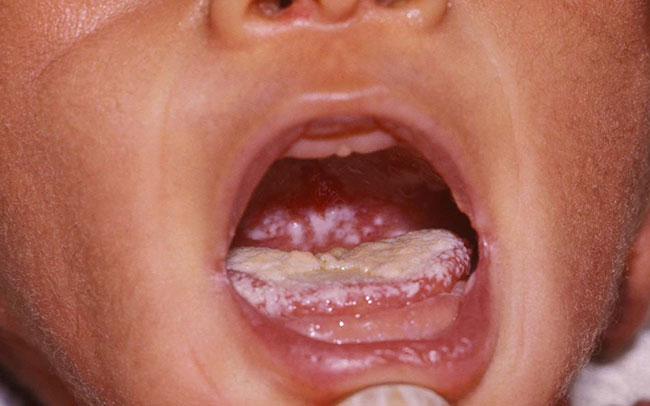
Close up of baby's open mouth showing white patches of thrush Oral thrush is a common fungal infection in the mouth. It can be easily and quickly treated if it doesn’t clear up on its own.

How do I know if my baby has thrush?

  • Look out for white spots or patches on your baby’s cheeks, gums and palate. These patches can look like milk spots, but if you rub them there will be a raw area underneath.
  • Your baby may fuss when breastfeeding or might even refuse your breast or bottle.
  • Sometimes babies get nappy rash when they have oral thrush. It might look red or bright pink with small raised spots and you might find standard nappy rash creams aren’t effective in clearing the rash.
  • If you are breastfeeding you may notice that you have thrush on your nipples, making them painful, red and cracked.

What treatment will we receive?

Your GP or Health Visitor may prescribe an antifungal treatment. The type of treatment will depend on the age of your baby. A course of treatment usually takes 7 days. If there is no improvement after a week, ask your GP for further advice.
  • If you have thrush on your breasts, the GP will prescribe medicine for you too.

How can I prevent thrush?

  • Oral thrush will usually become less of a problem as your baby’s immune system develops.
  • Take extra care when sterilising bottles, soothers and other feeding equipment.
  • If you still have thrush, wash your breasts after feeding. Use plain water, pat dry and applied any prescribed treatment to avoid further contamination.
  • To prevent re-infection, make sure you keep separate towels for your hands before and after feeding, and before and after changing your baby’s nappy.

Coronavirus breastfeeding local information

Coronavirus breastfeeding local information

Amid the current pandemic of widespread infection and difficulties in purchasing formula milks, breastfeeding has never been more important for the health and wellbeing of our babies and their mothers. Current understanding is that COVID-19 cannot be passed to your baby via breastmilk. Infection could be spread to the baby in the same way as to anyone in close contact with you. However, the benefits of breastfeeding outweigh any potential risks of transmission of the virus through breastmilk or by being in close contact with your child. Therefore guidance is that breastfeeding babies should stay with their mothers and continue to be breastfed. Practise excellent hand hygiene: washing thoroughly with soap for a minimum of 20 seconds after touching face or surfaces and before handling your baby. If you are symptomatic, then you can consider wearing a mask when handling and feeding baby. We know that breastmilk is likely to be part of baby’s best defence against the virus if they do contract it; and we know that there are currently shortages of alternative milks for baby, so we hope that this information sheet on breastfeeding support will be useful.

Lancashire and South Cumbria local support with breastfeeding during COVID-19

If you are considering beginning breastfeeding for the first time, aiming to increase breastmilk supply because of formula shortages, or having breastfeeding complications that you’d like some support with, then we’ve put together some information about how to access support. Face to face breastfeeding peer support groups have been suspended to protect all. Visits from your midwifery and health visiting service will continue to some degree, but may be not be undertaken face to face or be reduced going forward. However, there are many ways to access support and information from a trained peer supporter or lactation consultants within our area and nationwide, during classic ‘working hours’ and also round the clock, which may be of use. These services are available by telephone, via social media groups and in some cases via WhatsApp video call or similar. NB. THESE ARRANGEMENTS COULD CHANGE DAILY ACCORDING TO STAFF AVAILABILITY but we will update the information regularly. We have agreed care pathways across Lancashire and South Cumbria so that if you require more specialist support, those delivering the below services can refer you onto it.

Families and Babies Lancashire (covering North, Central, East and West Lancashire)

Staffed by peer supporters. Tel: 01254 722929 (9.30am – 2.30pm, 7 days a week) FAB Lancs Breastfeeding Support

Blackpool and Fylde Coast Breastfeeding Support

Staffed by peer supporters and lactation consultants. Fylde Coast Breastfeeding Support

South Cumbria Breastfeeding Support

Staffed by peer supporter/lactation consultant. ann@cumbriabreastfeeding.org.uk South Cumbria Breastfeeding Support SCBS In it Together (new group)

Barnoldswick, Burnley and Colne BFFs

Staffed by peer supporters. Barnoldswick Group Burnley Group Colne Group

Blackburn with Darwen

Staffed by infant feeding support workers and volunteer peers supporters. Tel: 01282 803266 (Voicemail facility – please leave name, contact number and support question and we will respond with two working days.)

Blackburn with Darwen’s Breast Intentions

Staffed by volunteer peer supporters. Breast intentions (BwD infant feeding support)

East Lancs NCT Feeding Support

Staffed by peer supporters. branch.eastlancashire@NCT.org.uk Burnley Bumps and Babies

National support

National Breastfeeding Helpline

Tel: 0300 100 0212 (9.30am – 9.30pm, 7 days a week) National Breastfeeding Helpline

The Breastfeeding Network Drugs in Breastmilk

A service for information on medications or medical conditions and breastfeeding – factsheets written by pharmacist Dr Wendy Jones (MBE). Breastfeeding network drugs fact sheets

La Leche League Helpline

Tel: 0345 120 2918 La Leche League Helpline

NCT Helpline

Tel: 0300 330 0700

Lactation Consultants of Great Britain

An interactive map enables you to find expert and experienced International Board Certified Lactation Consultant (IBCLC) support. Many of our colleagues are using videocalls, email and phone support as a priority during the present COVID-19 situation. (NB Private IBCLC support may incur a fee.) Find an IBCLC

Online support

Breastfeeding Twins and Triplets UK

Breastfeeding Twins and Triplets UK

Breastfeeding With CMPA and Other Food Allergies

Breastfeeding With CMPA and Other Food Allergies Support Group UK

Breastfeeding Yummy Mummies

Evidence based information and support, administration by a team of qualified breastfeeding peer supporters, health visitors, midwives and IBCLC. Breastfeeding Yummy Mummies

Support in other languages

Breastfeeding support in other languages

Information sources for health professionals

UK Drugs in Lactation Advisory Service (UKDILAS)

Information around medications whilst breastfeeding

Reflux (possetting)

Reflux (possetting)

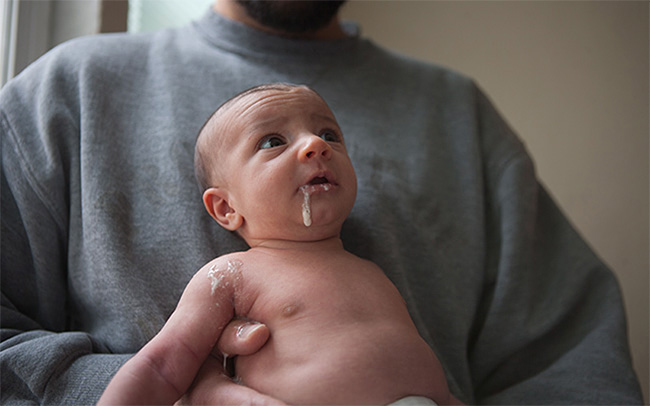
Man holds baby who has vomited milk dripping out of its mouth Reflux is the term for when some of the contents of the baby’s tummy comes up from the stomach and travels into the mouth. The stomach contents are acidic which can cause irritation and discomfort. This can make your baby cry for long periods, arch their back and refuse feeds. For most babies this is common and usually gets better on its own.

Should I get help if this happens?

  • You should seek advice if your baby starts vomiting excessively or brings up milk that is green, yellowish green or looks as if there is blood in it.
  • Seek help if your baby has a fever, is very sleepy, has diarrhoea, has a high pitched cry, appears to be choking or has stools (poo) that look black or have blood in them.
  • If reflux starts after six months of age, seek help from your GP.

What can I do to help my baby?

  • Get breastfeeding advice as soon as possible.
  • If bottle feeding, give your baby smaller amounts of milk at more frequent intervals – little and often.
  • Wind (burp) your baby frequently during feeds and keep him upright after feeds for at least 30 minutes.
  • Avoid using car seats immediately after feeding.
  • Avoid clothing or nappies that are tight around the tummy.
  • Avoid exposure to all types of smoke, as this can make your baby irritable.

Newborn jaundice

Newborn jaundice

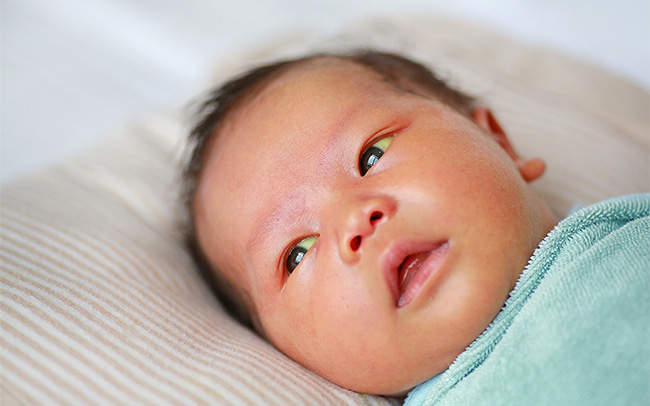
Close up of baby's face with yellow coloured skin Newborn jaundice is a common condition which presents at two to three days after birth, and can be noticed as a yellow colouring of the skin in the face, the upper body and often the whites of the eyes. If your baby becomes jaundiced in the first 24 hours, this is not normal, and your baby will need an urgent medical review. Jaundice is caused by a substance known as bilirubin, which builds up in your baby’s blood as a product of the fast breakdown of red blood cells. After a baby is born it can take a little bit of time for their liver to mature enough to efficiently breakdown bilirubin, thus causing newborn jaundice. Newborn jaundice is common and will normally resolve spontaneously within 10-14 days. A small number of babies will develop jaundice that is significant and requires phototherapy treatment in hospital under special lights. Jaundice can make babies sleepy and reluctant to feed, leading to dehydration which can make the jaundice worse. It is important to offer regular feeds, at least every three hours, if you think your baby has jaundice. Check that your baby is feeding well. If you are worried about your baby’s jaundice, or if you notice that your baby’s stools are pale/white, speak with your community midwife or call NHS 111 for advice.

Skin rash

Skin rash

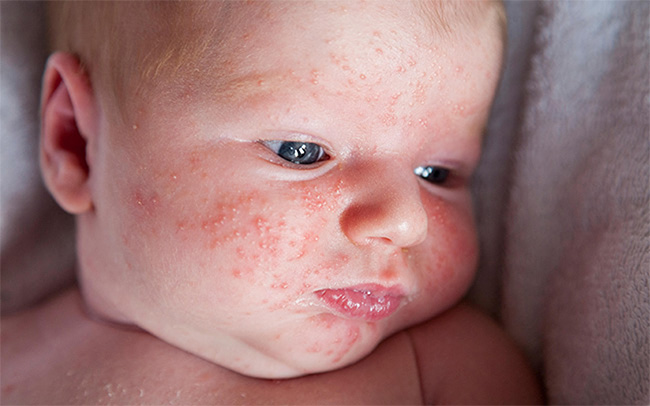
Close up of baby's face with prominent skin rash It is common for healthy newborn babies to get a skin rash in the first week or two of life. This rash is known as erythema toxicum neonatorum. It does not cause any long-term problems and requires no treatment. Scroll down in the related link below to Rash without fever or itching to view images of common, harmless spots in newborn babies.

Breasts and genitals

Breasts and genitals

Newborn baby being weighed It is common for a newborn baby’s breasts to be a little swollen and they may ooze some milk, whether a boy or a girl. The genitals of newborn babies often appear rather swollen but will look in proportion with their bodies in a few weeks. Girls sometimes have a cloudy discharge from their vagina and can have a small amount of bleeding known as a ‘pseudo period’ caused by the withdrawal of your hormones that she received via the womb. This is normal, however, if you are concerned speak to a midwife.

Bumps and bruises

Bumps and bruises

Close up of baby's face with vertical red mark from forehead to chin from use of forceps during birth Newborn babies commonly have some swelling (caput) and/or bruises on their head. This can be the result of the squeezing and pushing during their birth and often this will soon disappear. Bumps and bruises are more likely to occur with an assisted ventouse or forceps birth and may occur on one or both sides of the head. At times, these may last for weeks but will resolve naturally, without a need for any treatment.

Eye care

Eye care

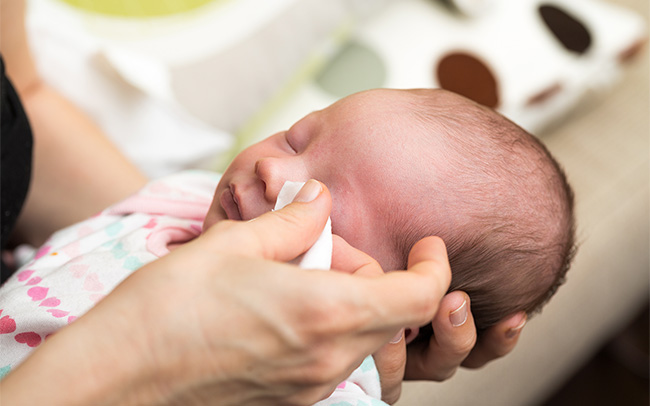
Close up of baby's head supported by mother's hand while the eyelid of one of the baby's closed eyes is wiped with a tissue No special cleaning of your baby’s eyes is required unless your baby develops an infection. However, look out for any signs of eye stickiness, redness or discharge. These can occur for no apparent reason but may appear as a yellow discharge in one or both eyes. Should this happen, please inform your midwife or health visitor, who may take a swab from the eye(s) and/or arrange for your doctor to prescribe treatment.

Nappy content

Nappy content

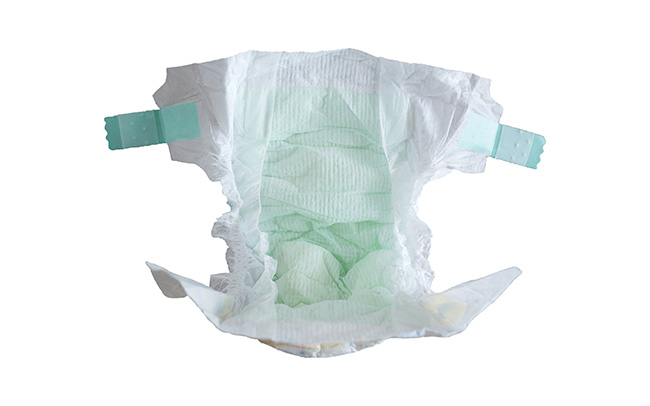
Opened out baby nappy

NEWBORN STOOL AND URINE

Day 1Meconium Day 2-3Changing lighter green Day 4-5Yellow

Baby’s age

Wet nappies

Dirty nappies

1-2 days 1-2 or more 1 or more dark green/black
3-4 days 3 or more becoming heavier 2 or more green/changing
4-5 days 5 or more and heavy 2 or more yellow, becoming looser
5-6 days 6 or more and heavy 2 or more yellow, watery, seedy appearance
Your baby’s urine (wee) and stools (poo) can show if your baby is getting enough milk. The more milk your baby drinks, the more urine your baby will produce. If your baby is producing lots of clear urine, this is a sign that they have had enough milk. Urine output gradually increases up to day 6-7, when they should have at least six heavy wet nappies in 24 hours. As your baby drinks and digests milk in the first few days after birth, the dark, black sticky meconium changes to a mustard yellow coloured stool (poo). If your baby has not passed meconium within the first twenty four hours of birth, you should speak to your midwife or GP. If the stool is still dark black on day 3, this suggests they may not be getting enough milk. Speak to your midwife immediately if your baby’s urine or stool is not increasing/changing according to the table above. Some babies will pass an orange/red substance (urates) in their urine. Speak to your midwife if you see this beyond the first two days. If you have had a baby girl, you may notice that she has a small ‘pseudo period’. The withdrawal of your hormones that she received via the womb can cause a small amount of vaginal bleeding. This is perfectly normal.