Parents and parents-to-be with additional needs/disability are often well adapted to their activities at home and at work, in their relationships and in interactions with their surrounding environment. Adapting to pregnancy, birth and parenting may require further adaptations. It is estimated that almost 10% of parents have a long term health condition which may result in disability or adaptation to daily living.Maternity and other services can work in partnership with parents to facilitate individualised decision-making, equal access and making adjustments for pregnancy/birth and parenting.
Tips for getting the support you need:
Report your additional needs when completing your pregnancy self-referral form and discuss these needs again when you meet your midwife for the first time.
Ask for a named midwife or to be part of a continuity of care team. Knowing your midwife facilitates partnership working and personalised planning around your own needs.
You are the expert in yourself, so talk to your midwife about what would help you through pregnancy, birth and parenting. Complete the Health and wellbeing in pregnancy personalised care and support plan with your midwife, highlighting the need for adjustments and improved access.
Consider a self-referral for a Health Needs Assessment if you require assessment of your home, care needs or benefits.
Refer yourself to your local sensory impairment team for advice and adaptive equipment i.e. vibrating mat to alert to baby’s cry if you are hearing impaired.
Ask to see an occupational therapist for further specialised adaptive advice for home and parenting. Contact the local Social Services Occupational Therapy (for adaptive equipment and home adaptations) or Community Therapy teams e.g. neuro-rehabilitation for specific conditions such as Multiple sclerosis, Stroke or Functional Neurological Disorder, or via the community Learning Disability Team. Your GP can assist with making these referrals.
You can request longer appointment times, transport and accessibility to venue for appointments to facilitate your or your supporter’s needs.
Consider if you need someone with you at appointments, i.e. British Sign Language (BSL) interpreter, advocate or supportive relative. Talk about whom you would need to have with you during your hospital inpatient stay – assistance dog/supporter/interpreting service.
Discuss your preferred mode of communication i.e. small chunks of information, emailed information to support verbal advice to support memory, large print, technical aids i.e. signing app, audio messaging.
Ask about access to antenatal classes. The BSL interpreter can be with you if you are hearing impaired; the information can also be tailored for visually impaired parents. The midwife can allocate time for a personal session to individualise to your needs.
Environment:
It may be useful to ask for a tour of the birth and after birth areas to familiarise and identify where adjustments may be required.
Talk to your midwife about accessibility of the birthing pool, bathrooms, showers, bed heights, adjustable cot height and a single room after the baby is born to facilitate your stay if needed.
Talk to your midwife about lighting, sound or temperature sensitivities or any preferences that make adapting to the environment more manageable.
Discuss birth positions in case modifications are needed.
Thinking about baby care:
Talk to the midwife about your home environment – think about inside the home and outdoors.
Baby sleeping area – would a cot attached to the bed make it easier to reach the baby overnight?
Plan your night and day equipment – safe sleeping in your bedroom and in your living room i.e. Moses basket.
Baby changing stations (e.g. mat and equipment) in day/night area – to support energy conservation.
Carrying the baby – a baby wearing sling may help to enable you to keep your hands free or a light pushchair at home to move the baby from room to room.
Transporting the baby – will you use public transport, car or walk? Consider your needs when choosing a pushchair. The weight, brake location, ease of access, assembly and storage are things to consider when choosing the pushchair.
Infant feeding – discuss with your midwife. Consider a supportive infant feeding pillow to support baby’s position for feeding. Consider your own comfort and supported position. Where will you be feeding? Modified feeding positions i.e. for one handed feeding, or equipment to support holding the bottle. Ask your midwife about collecting breast milk during the last part of pregnancy if you feel this could be useful to supplement the baby’s needs in the early days.
If fatigue is a concern, your midwife can work with you to offer tips such as sleeping when the baby sleeps, energy conservation tips such as planning, pacing and prioritising what you need to ‘do, delay, delegate or ditch’ to enable your self-care and meeting the needs of your baby.
Talk to your supporters/family to ascertain how they can help you. Plan during the pregnancy so that you are ready for when the baby arrives. Where there is limited support discuss with your midwife to explore what other services might be available to you.

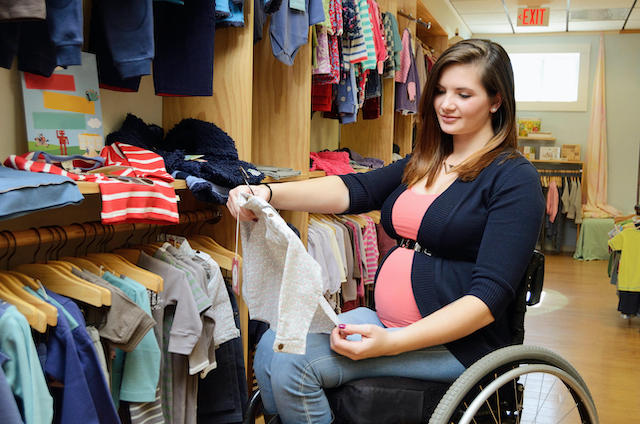
 Parents and parents-to-be with additional needs/disability are often well adapted to their activities at home and at work, in their relationships and in interactions with their surrounding environment. Adapting to pregnancy, birth and parenting may require further adaptations. It is estimated that almost 10% of parents have a long term health condition which may result in disability or adaptation to daily living.
Maternity and other services can work in partnership with parents to facilitate individualised decision-making, equal access and making adjustments for pregnancy/birth and parenting.
Parents and parents-to-be with additional needs/disability are often well adapted to their activities at home and at work, in their relationships and in interactions with their surrounding environment. Adapting to pregnancy, birth and parenting may require further adaptations. It is estimated that almost 10% of parents have a long term health condition which may result in disability or adaptation to daily living.
Maternity and other services can work in partnership with parents to facilitate individualised decision-making, equal access and making adjustments for pregnancy/birth and parenting.


