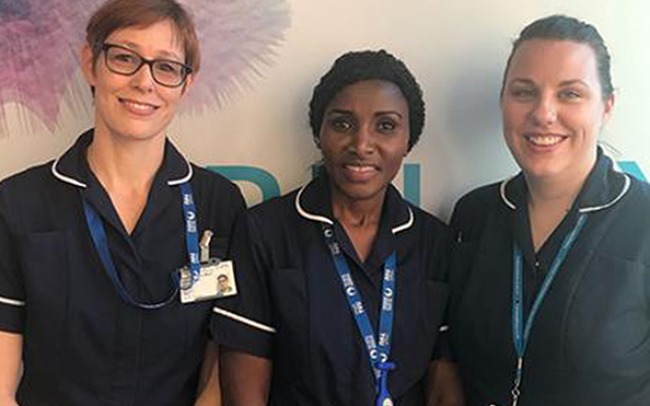
Our expert maternity team will tailor our care to your needs. Our website and information on this app will provide you with information on what to expect if you choose to have your baby with us.
At the Whittington Hospital we are here for you from the very start the very end of your pregnancy journey. Our maternity unit is at the forefront of innovation. This includes partners staying overnight, enhanced recovery, midwifery-led induction of labour and normalising birth. Our team will guide and support you through this exciting time in your life.
We tailor maternity care to your individual needs, from your first antenatal appointment with a midwife
through to our midwives and health visitors seeing you and your baby at home after birth. This coordinated approach means that you will only have one care record with our Trust, which will enable you to enjoy a smoother journey of care during your pregnancy and beyond.
Once we have received your referral, you’ll be offered a series of appointments with a midwife. Most of your care will be provided by midwives in the community. If you have an intermediate or high-risk pregnancy our team of highly skilled obstetricians are here for you. During your pregnancy our midwives will check that you and your baby are well, give you useful information to help you have a healthy pregnancy (including healthy eating and exercise advice) and answer any questions you may have.
Our antenatal services include:
• Acupuncture
• Antenatal Ward
• Care of your body during pregnancy classes
• Community Midwives
• Maternity Assessment Day Unit
• Obstetric Medicine Clinic
• Parentcraft Classes
• Early Pregnancy Unit / Women’s Diagnostic Unit
Video tour of Whittington Hospital Maternity services
Our specialist services include
Our experienced Midwives and Obstetric consultants and specialised midwives provide excellent care for women with complicated pregnancies.
These specialist antenatal clinics/services include:
• FGM Service
• Antenatal Diabetes Clinic
• Fetal Medicine Service
• Safeguarding
• Twin Clinic
• Vaginal Birth After Caesarean Section (VBAC)
• Obstetrics, Weight and Nutrition (OWN)
• Interpreting
• Whooping Cough and Flu Vaccine Service
• Maternity Acupuncture Service
At Whittington Health Maternity Service you will receive screening tests during your maternity pathway. Watch this video for details:
"We are committed to delivering top-quality patient care, excellent education and world class research."
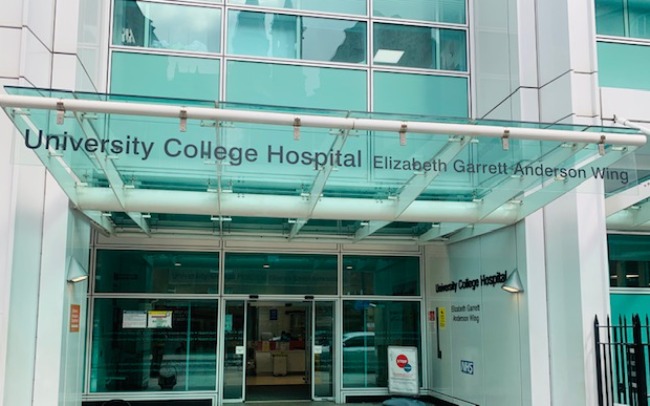
At University College London Hospital, the Elizabeth Garrett Anderson (EGA) Wing provides comprehensive, high quality care with the latest technology for women and their babies in the areas of gynaecology, maternity and neonatal care. Maternity services offer access to a full range of care options in different settings including home birth, community care, a co-located birth centre and our labour ward with a highly skilled team of midwives and obstetricians – and two dedicated theatres. The gynaecology service offers both inpatients and outpatients care, whilst the level 3 neonatal unit ensures the safest and highest quality care for babies born with us and from across London.
University College London Hospital maternity services virtual tour
Our specialist services include
Fetal medicine, maternal medicine and various maternity specialities to provide high quality care for women and their babies.
Fetal Medicine
Level 3 Neonatal Unit:
Our neonatal service is a recognised centre of excellence caring for acutely ill and preterm babies from our local area and beyond. We are the only level 3 neonatal unit in the area, which means we offer the highest level of intensive care to very ill babies, including a neonatal intensive care unit (NICU).
The Neonatal Unit provides 24-hour care for premature and sick babies. It is divided into three areas:
1. Neonatal Intensive Care Unit (NICU) – provides support for babies with breathing problems and other specialist treatment needs.
2. High Dependency Unit (HDU) – provides support for babies who require less intensive care than babies in NICU, but are still not stable enough for care in the SCBU
3. Special Care Baby Unit (SCBU) – provides support for babies who need tube feeding, additional oxygen support and light therapy (phototherapy)
Multiple Pregnancy Service
Speciality in the management of twin to twin transfusion syndrome in monochorionic twins; using fetoscopic laser ablation to placental vessels and has referral from all over the UK.
Fetal Medicine Unit provides a comprehensive service throughout pregnancy in the diagnosis and management of all fetal conditions. Our neonatal service is a recognised centre of excellence and our close relationship with Great Ormond Street Hospital for Children allow us to offer unrivalled antenatal and postnatal care in:
• High risk pregnancies
• Prevention of Preterm birth
• Invasive prenatal diagnosis
• Non-invasive prenatal testing (NIPT)
• Fetal therapy and surgeries
• Fetal Cardiac anomalies
• Down’s syndrome screening
• Early diagnosis of fetal abnormalities
• Spina bifida open fetal surgery
• Spina bifida surgery in the womb – ONLY done at UCLH
Maternal Medicine
Midwifery specialist services available at UCLH:
• Diabetes specialist
• Infant feeding specialists
• Peri-natal mental health
• Fear of Birth Clinics
• Safeguarding
• Bereavement
• Infectious diseases specialist
• Research midwives
At UCLH, we strive to provide top quality care to all our women and babies. In addition to our specialist care service, we provide care for other complex matters in pregnancy. Some of this are as follows:
• Body Mass Index during pregnancy
• Language barrier – where your first language is not English
• Planning a vaginal delivery after a caesarean section
• Peri-natal loss
• Care and long term management of third and fourth degree tears
• IVF pregnancies
• Previously undergone bariatric surgery
• Pre-eclampsia
• Chronic Histiocytic Intervillositis (CHI)
• Haematology issues
At UCLHl you will receive screening tests during your maternity pathway. Watch this video for details:
Buses 14, 24, 73, 134 and 390 serve Tottenham Court Road north and southbound. The 73 (toward Oxford Circus) and the 390 (to Victoria) will stop outside University College Hospital on Euston Road.
Nearest tube stations are:
Warren Street (Northern / Victoria Lines)
Euston Square (Circle / Hammersmith & City / Metropolitan Lines)
Parking
University College Hospital does not have a designated car parking other than for patients with Blue Badges who are attending hospital outpatient appointments, day cases and the Emergency Department. However, we do have surrounding areas with car parking spaces through this link:
If you are driving to UCLH please be aware that most of our hospitals are within the congestion charge and the ultra low emissions zones. Find out more on the TFL website:
Congestion chargeUltra low emission zoneFor information on reclaiming the Congestion Charge click here.
For information on reclaiming the ULEZ charge click here.
"We are really pleased that you’re considering having your baby at North Middlesex University Hospital. Our expert maternity team will tailor our care to your needs."
Our expert maternity team will tailor our care to your needs. Our website and information on this app will provide you with information on what to expect if you choose to have your baby with us.
North Middlesex University Hospital maternity unit tour
Our specialist services include
Antenatal clinic for women who decline blood or blood product in pregnancy including Jehovah’s witnesses
Anaesthetic pre-assessment clinic
Birth Reflection unit
Birth options/ Complex Pregnancies requiring midwifery input/ Perinatal mental Health, Tokophobia/ Requesting birth out of guidance/ Maternal request for ELCS-no fetal or fetal co-morbidities
"Our vision is to ensure that women and their families are provided with excellence in maternity care, and services that are co-produced with our local MVP (Maternity Voice Partnership) and other service user representatives."
The Royal Free London NHS Foundation Trust is the largest provider of maternity services in the North Central London sector. We are proud to provide supportive, personalised and high-quality maternity care to more than 10,000 women living in and around Barnet, Camden, Enfield, Haringey, Hertfordshire, Islington and Middlesex. We offer maternity care from several hospitals and community hubs. Our two main maternity hospitals are Barnet Hospital and the Royal Free Hospital. We also provide maternity services at Chase Farm Hospital, Edgware Community Hospital, Finchley Memorial Hospital and a range of health centres, GP practices, Children’s and Family Centres and other community locations. We are proud to be able to offer a number of birth place options supporting women who choose to birth at home, in our Barnet and Heath alongside birth centres, the freestanding Edgware Birth Centre, as well as in our consultant-led services on both our Barnet and Hampstead sites.
You can self-refer to the Edgware Birth Centre using the online self-referral form for the Royal Free Hospital. The Edgware Birth Centre is part of the Royal Free group of hospitals.
"Our vision is to ensure that women and their families are provided with excellence in maternity care, and services that are co-produced with our local MVP (Maternity Voice Partnership) and other service user representatives."
Edgware Birth Centre offers you a relaxed and friendly environment for the birth of your baby.
Why give birth in the Edgware Birth Centre?
The right support and environment can make a huge difference to your and your baby’s experience of labour and birth. Opened in 1997, the Edgware Birth Centre offers a friendly ‘home from home’ environment, run by midwives and midwifery assistants.
If your pregnancy has been straightforward and there is no reason to think that you or your baby are likely to need medical support during labour or after the birth, or if you wish to have a more personalised birth plan, then the Edgware Birth Centre could be a good choice for you. It is suitable for women who expect to have an uncomplicated pregnancy and who go into labour between 37 and 42 weeks.
Our aim is for all of our mums to have a safe, positive and confident experience of pregnancy, labour and childbirth and we work hard to make this happen.
Advantages of birthing in a standalone midwifery-led setting:
• You are more likely to have a normal birth
• You are less likely to need intervention
• You are less likely to have vaginal or perineal tears
• You are more likely to be satisfied with your care
• You are less likely to need pain relieving drugs for labour
Considerations when using a birth centre:
Women who come to the birth centre are usually in good health so there is no reason to expect a problem during birth. Midwives are trained to detect if labour is not progressing as well as it should and to make sure you and your baby are safe. Our figures show that around 70% of first time mothers and more than 90% of second time mothers using a birth centre give birth without needing any medical care.
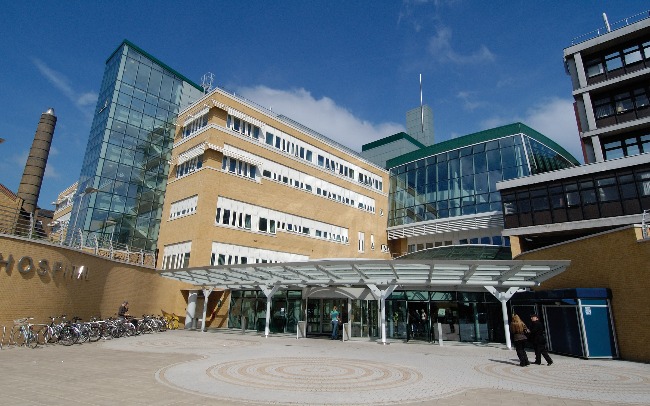
If medical help is necessary, or you decide you would like an epidural, you will be transferred to Barnet Hospital by ambulance, accompanied by your midwife. The journey is approximately 10 minutes.
Extra emergency equipment is kept in the birth centre, should unforeseen problems arise for a woman or baby. Staff receive regular training to deal with such situation.
Further information on birth centres is available on the following websites:
Antenatal workshops including infant feeding, active birth and caring for your baby
Five en-suite birth rooms/postnatal bedrooms where you and your partner will usually be able to remain for the duration of your stay
Three birthing pools for you to labour and give birth in to help as a: form of pain relief (70% of women who have their babies in the birth centre use water at some stage in their labour)
Birth stools to help you with an upright birth, as well as bean bags and birth balls
Water births:A birth pool provides the perfect private nest for you to labour in, with the support and warmth of the water helping women through labour.Labouring in water may help the body to release less of the stress hormone adrenaline and more of the labour hormone oxytocin. This stimulates the labour contractions to be strong and regular. Your body may also release more endorphins, the hormones that help you cope with contractions.As well as helping women cope with the pain of childbirth, water births also seem to offer babies a more peaceful journey from the uterus (womb) into their mums’ arms. Babies are bathed in warm water as they emerge from the birth canal, and the pool environment feels similar to the uterus.At Edgware Birth Centre you will receive screening tests during your maternity pathway. Watch this video for details:
"Our vision is to ensure that women and their families are provided with excellence in maternity care, and services that are co-produced with our local MVP (Maternity Voice Partnership) and other service user representatives."
The Royal Free London NHS Foundation Trust is the largest provider of maternity services in the North Central London sector. We are proud to provide supportive, personalised and high-quality maternity care to more than 10,000 women living in and around Barnet, Camden, Enfield, Haringey, Hertfordshire, Islington and Middlesex. We offer maternity care from several hospitals and community hubs. Our two main maternity hospitals are Barnet Hospital and the Royal Free Hospital. We also provide maternity services at Chase Farm Hospital, Edgware Community Hospital, Finchley Memorial Hospital and a range of health centres, GP practices, Children’s and Family Centres and other community locations. We are proud to be able to offer a number of birth place options supporting women who choose to birth at home, in our Barnet and Heath alongside birth centres, the freestanding Edgware Birth Centre, as well as in our consultant-led services on both our Barnet and Hampstead sites.
All NHS North Central London maternity services provide a birth reflections clinic where you can discuss with a midwife your experiences of birth, particularly if you have had a traumatic event during or after birth.
Some things to think about before you attend a birth reflections clinic appointment can be found below.
Write down any significant concerns (medical, emotional or other) about your experience of pregnancy, labour, birth and immediately after birth – particularly if you think it could have an effect on your long-term physical or emotional health, or the health of your baby. Share your concerns with your midwife or doctor.
North Middlesex University Hospital: There is a Birth Reflections clinic at the North Middlesex.
Information about all our specialist maternity clinics:
University College London Hospital NHS Foundation Trust
UCLH has an official charity supporting patients, staff and research at University College London Hospitals (UCLH) NHS Foundation Trust. We focus on four main areas; supporting patient care, training and developing staff, environment and equipment and advancing research.
Our maternity website in North Central London where you can give us your feedback is: www.nclmaternity.nhs.uk
You can give feedback on the website by using the “Contact us” tab at the purple menu bar near the top of the page.
We also have links to the local service user groups, called Maternity Voices Partnership of which there are four in NCL – the link can be found at the bottom of the page in the section:
If you are a maternity service user and would like to get involved in shaping local maternity services, please visit our page: NCL Maternity Voice Partnerships
.
University College London Hospital NHS Foundation Trust
The UCLH Maternity Voices Partnership (MVP) is a team of women and their families, commissioners and providers (midwives and doctors) working together to review and contribute to the development of local maternity care.
We have meetings six times a year and facilitate opportunities for users of the maternity service to help shape the unit to work for them and future families.
We want to ensure that every woman on the maternity pathway has a chance to have her voice heard about the service she is receiving through our MVP.
We would love to have you join or just give us feedback on your experience at UCLH – let us know of good experiences that you have had an any areas that you think the trust could improve upon.
This app, originally developed by North West London Local Maternity System, has been adapted for use in North Central London Local Maternity & Neonatal System.
If you live outside of North Central London, you can still use this app’s content and develop your personal care plans. To find your nearest unit follow this link:
National maternal and neonatal programmes in North Central London
We have the following neonatal services in North Central London:
• 1 x level 3 neonatal intensive care unit
• 4 x level 2 high dependency units
• 5 x level 1 special care units
The Maternal and Neonatal Safety Improvement Programme (MATNEOSIP)
A programme to support improvement in the quality and safety of maternity and neonatal units across England – formerly known as the Maternal and Neonatal Health Safety Collaborative.
The programme aims to:
• improve the safety and outcomes of maternal and neonatal care by reducing unwarranted variation and provide a high quality healthcare experience for all women, babies and families across maternity and neonatal care settings in England
• contribute to the national ambition, set out in Better Births of reducing the rates of maternal and neonatal deaths, stillbirths, and brain injuries that occur during or soon after birth by 50% by 2025.
The five priorities in North Central London are:
• Increase the proportion of smoke-free pregnancies.
• Optimisation and stabilisation of the very preterm infant.
• Detection and management of diabetes in pregnancy.
• Detection and management of neonatal hypoglycaemia.
• Early recognition and management of deterioration during labour and early post-partum period.
PReCePT (Prevention of Cerebral Palsy in Preterm Labour)
The PReCePT programme aims to reduce the incidence of cerebral palsy in babies born prematurely by giving women a medication called magnesium sulphate during labour. This programme is being rolled out across North Central London and other activities include improving care, strengthening staff capability across maternal and neonatal units and supporting mothers to become more involved with their care to improve quality of life of preterm babies and their families.
Reducing the incidence of cerebral palsy by offering magnesium sulphate to all eligible women in England during preterm labour (less than 30 weeks).
For every 37 mothers who receive magnesium sulphate, we can prevent one case of cerebral palsy. It is used in at least 80% of this cohort of women across North Central London.
Regular audits of the use of magnesium sulphate are carried out across North Central London. In collaboration with UCL Partners we are undertaking regular learning and sharing events and safety culture surveys.
You can choose to have your baby in a private hospital. Find more information about private maternity units and locate specific private maternity units here.
Private maternity service within an NHS facility in your region
Private rooms
All hospitals in North Central London have the option of private rooms for after the birth, and these vary in cost. You can ask your midwife or doctor about this and information is provided within the directory of services.
Research is used to build new knowledge, improve current care and develop new treatments. The National Institute for Health Research Clinical Research Network (often referred to as CRN) provide the infrastructure that allows high-quality clinical research to take place in the NHS.
The Women’s Health department at UCLH are committed to improving outcomes for women and babies by improving care, diagnosis and treatment within obstetrics and gynaecology. A small team of research midwives and nurses work on an extensive portfolio of CRN funded research studies that cover specialised areas including maternity, gynaecology, neonatal care, fertility, genetics, miscarriage, urogynaecology and cancer.
UCLH is a large teaching hospital and has many research projects underway at any one time. Whilst under our care you are likely to be invited to participate in a research project by healthcare professionals. This may be one of our consultants, nurses or midwives.
Alternatively, if you are interested in volunteering for any of our studies or just would like to have some more information please contact us:
For support with quitting smoking, please discuss with your maternity team in North Central London who can refer you to the specialist smoking cessation midwife and service locally which are located at:
Elizabeth Garret Anderson unit at University College London Hospitals (UCLH), Camden
Barnet Hospital, Barnet
Royal Free, Hampstead
North Middlesex Hospital, Edmonton
Whittington Hospital, Archway
For support with quitting smoking, please discuss with your maternity team in North Central London who can refer you to the specialist smoking cessation midwife and service locally which are located at:
Elizabeth Garret Anderson unit at University College London Hospitals (UCLH), Camden
Barnet Hospital, Barnet
Royal Free, Hampstead
North Middlesex Hospital, Edmonton
Whittington Hospital, Archway
Talking therapy services or IAPT services are offered throughout North Central London, and in every London borough, providing support to those experiencing symptoms of anxiety or depression. Priority is given to pregnant women and new parents. You can either self-refer over the phone or online, or ask your midwife or GP to do it for you. The service is free and aims to be flexible around your needs.
Talking therapy/IAPT contact details in North Central London:
Better Births, Improving Outcomes of Maternity Services in England (2016) set out a vision for maternity services across England to deliver safer, personalised care for women with maternity staff supported to deliver care which is women centred, in cultures which promote innovation, continuous learning, and break down organisational and professional boundaries. North Central London was an ‘early adopter’ of the national maternity transformation plan ‘Better Births’ and had an ambitious transformation plan which sought to improve the safety, personalisation and quality of care.
Tommy’s provide excellent information and resources if you feel that your baby is not moving as you would expect. Follow this link and see the related links below it:
You will meet several midwives throughout your pregnancy, birth and beyond. Midwives are the main caregiver when your pregnancy and birth are straight forward. In North West London we are working hard to ensure each woman has a named midwife who is responsible for coordinating your maternity care.
Obstetrician
These are doctors who specialise in caring for women during pregnancy, birth and in the period immediately after birth (whilst in the maternity unit). You may see an obstetrician during pregnancy if you have any issues which require review or more specialised management and they will be involved if you have a caesarean or assisted birth.
Paediatrician/Neonatalogist(baby doctor)
Paediatricians or neonatologists are doctors specialising in the care of newborn babies and children. They will be involved in your care if early (premature) delivery is anticipated or if there are likely to be concerns about the health of your baby during or after the birth.
Sonographer
These are professionals who undertake your ultrasound scans. They are specially trained to undertake scans during pregnancy.
Maternity support worker
You may meet maternity support workers during pregnancy, birth or beyond. They support the maternity team and provide some of your care throughout the journey.
Student midwife
Maternity units in North West London work closely with local universities to support midwives and doctors in training. These students will work alongside their midwife ‘mentor’ and will ask for your consent before providing you with any care.
Health visitor
Health visitors work in teams. They work closely with the other professionals listed above, including GPs and organisations that support families where you live. Most families in England will be offered several review contacts and additional support depending on the individual needs of your family.The health promoting visit at 28 weeks of pregnancy is the first time that the health visitor meets parents. A health needs assessment will be agreed, covering physical, mental and emotional health and wellbeing. The health visitor will also discuss a number of issues, including transition to parenthood, how to enhance the parent-child bonding experience and how parents can help their baby’s early development.
Other staff members
You may meet other members of staff or medical students, depending on your pregnancy needs and where you choose to have your care.
Our objective
Within North Central London our objective for maternity services is to fully meet the requirements of the Better Births recommendations, ensuring safe care and an improved experience for women and their families throughout their maternity pathway.
{‘hospitals’:[{‘slug’:’hospital-barnet-hospital’,’name’:”Barnet Hospital”,’imageurl’:’https://mumandbabyaccessible.imagineear.com/wp-content/uploads/2022/01/Barnet-Hospital.jpg’,’id’:0,’coordinate’: {‘latitude’:51.65099,’longitude’:-0.21369}},{‘slug’:’hospital-edgware-birth-centre’,’name’:”Edgware Birth Centre”,’imageurl’:’https://mumandbabyaccessible.imagineear.com/wp-content/uploads/2022/01/Edgware-Birth-Centre-1.jpg’,’id’:1,’coordinate’: {‘latitude’:51.60607,’longitude’:-0.27161}},{‘slug’:’hospital-north-middlesex-university-hospital’,’name’:”North Middlesex University Hospital”,’imageurl’:’https://mumandbabyaccessible.imagineear.com/wp-content/uploads/2022/01/TB-_NMU.jpg’,’id’:2,’coordinate’: {‘latitude’:51.61371,’longitude’: -0.07281}},{‘slug’:’hospital-the-royal-free-hospital’,’name’:”The Royal Free Hospital”,’imageurl’:’https://mumandbabyaccessible.imagineear.com/wp-content/uploads/2021/09/Royal-Free-Hospital.jpg’,’id’:3,’coordinate’: {‘latitude’:51.55314,’longitude’:-0.16538}},{‘slug’:’hospital-university-college-hospital’,’name’:”University College London Hospital”,’imageurl’:’https://mumandbabyaccessible.imagineear.com/wp-content/uploads/2021/09/UCLH-Entrance-1-1.jpg’,’id’:4,’coordinate’: {‘latitude’:51.52519,’longitude’:-0.13644}},{‘slug’:’hospital-whittington-health-maternity-service’,’name’:”Whittington Health Maternity Service”,’imageurl’:’https://mumandbabyaccessible.imagineear.com/wp-content/uploads/2022/01/WH_Magdala_Ave_Entrance_.jpg’,’id’:5,’coordinate’: {‘latitude’:51.56680,’longitude’:-0.13974}}]}
This series of videos covers a range of topics covering pregnancy, birth and beyond. Watch these and read the related content spread thoughout the Mum & Baby app.
Most people with Lupus can safely get pregnant and with appropriate support and care can have normal pregnancies and healthy babies. However, pregnancy with SLE carries a higher risk to mother and baby compared with pregnancy in women with no medical concerns. For this reason, your maternity team will consider such pregnancy as ‘high risk” to ensure that care is appropriate for your clinical condition and involves several healthcare professionals.We recommend that you access the BUMPS website (Best Use of Medicines in Pregnancy), for information and advice relating to medications taken prior to and during pregnancy. It is important not to stop any medication before checking with your doctor as this may be harmful to you or your baby.
What does this mean for my pregnancy?
For me:
In general, pregnancy does not cause flares (worsening) of SLE, but higher risk of flares is noted in women who have had flares within the six months prior to pregnancy, have had very active disease, or if SLE treatment has been stopped. If flares happen, they often occur during first or second trimester of pregnancy or in the first few months after the birth.It is vital to report flares promptly as they increase the risk of complications. Complications can include pre-eclampsia, blood clot in deep veins or lung, severe infection, and stroke.
For my baby
SLE in pregnancy increases the risk of miscarriage, preterm birth, slower growth in the womb (intrauterine growth restriction) and stillbirth, compared to a woman with no medical concerns. Factors such as previous miscarriage, antiphospholipid syndrome, active Lupus before or during pregnancy, kidney disease and pre-eclampsia increase this risk.Your blood tests will include checking your antibodies status for anti-Ro and anti-La antibodies. If these are present, there is a small chance these antibodies may cross the placenta and therefore could affect the baby causing a 2% risk of congenital heart block and 5% risk of cutaneous neonatal lupus (where certain antibodies cross from mother to baby). However, having neonatal Lupus does not appear to increase the chance of your baby developing SLE in adult life.
What will the medical team recommend?
The aim will be to personalise the care to you and your clinical condition. You will be seen more frequently in a specialist consultant-led maternal medicine antenatal clinic and offered regular scans to monitor baby’s growth, alongside the care provided by your midwifery team.If you have Ro and La antibodies, the team will organise a specialist heart scan for your baby (echocardiogram).You will be advised to take 75mg of aspirin each night from 12 weeks until 36 weeks to reduce your risk of pre-eclampsia. You may require calcium supplementation. Since there is an increased risk of developing a blood clot (thrombosis) you may be advised to take additional medication such as blood-thinning injections.Other medical treatment will be tailored according to your disease severity and will be discussed in detail by your clinical team.
What tests will/may be considered? How often may they be needed?
At the start of pregnancy, baseline blood tests will also include kidney and liver function tests, antibody tests like anti-Ro and La antibodies, if these haven’t been done previously, and other disease relevant tests. Urine will be tested for protein. Based on your past medical history, other tests like echocardiogram, lung function test may be considered. If you are at risk of Vitamin D deficiency, these levels will be also be checked.Throughout the pregnancy, your blood pressure, urine protein levels and blood results will be closely monitored. More frequent blood pressure and urine checks will happen if you have hypertension, pre-eclampsia and/ or renal disease.
What symptoms and signs should I be looking out for?
Differentiating between pregnancy-related symptoms and those of SLE can be difficult. You may notice a range of changes throughout pregnancy that may be unrelated to your SLE, but it is important to mention any symptoms that are worrying you.You must try and avoid triggers that you may know can set off your flare ups.
What are the symptoms/concerns, which mean that they should be reported immediately?
Flares of SLE is when your symptoms worsen and make you feel unwell. Often, this involves symptoms you have noticed previously, and some people may also develop new symptoms. Common symptoms that indicate a flare include raised body temperature not due to an infection, painful and swollen joints, increase in tiredness, rashes, ulcers in your mouth or nose and increased swelling of your legs.You should also immediately report symptoms like shortness of breath, chest pain, heart palpitations, painful swollen calf, feeling unwell; severe headache, seeing flashing lights or experiencing pain in upper tummy, contractions, vaginal bleeding, rupture of membranes or reduced baby movements.
How are recommendations made regarding my care?
Treatment options
There are overarching guiding principles on the use of medications during pregnancy and breast feeding. Based on the individual clinical condition medications will vary. In general, SLE medications that are safe in pregnancy, during breast feeding and required to maintain remission and/or treat flares include hydrochloroquine, azathioprine, cyclosporine and tacrolimus. Aspirin and paracetamol are safe in pregnancy. Corticosteroids are safe to control active disease.Medications to control high blood pressure may become necessary.
Timing of birth
People with SLE are more likely to have a preterm birth, that is birth before 37 weeks. The risk is particularly increased in the presence of active Lupus, kidney disease, hypertension and pre-eclampsia. Birth may start spontaneously or may be induced due to concerns relating to your or your baby’s health.Your team will discuss the timing of birth with you, considering your and your baby’s health.
How may this impact my birth choices?
For most people with SLE vaginal birth should be possible, but choices will be influenced by how this pregnancy progresses, your previous births and other possible concerns.Discuss your personal birth preferences with the team.
How may this affect care after the birth?
Your team should make a care plan with you relating to your and your baby’s care after the birth.You will be given guidance on medications that need to continue and will be safe to take whilst breastfeeding. There is an increased risk of SLE flare after the birth and you must report these immediately so that the medications can be adjusted.You will require blood thinning medications as the risk of blood clots increases significantly after the birth. These may need to continue for up to six weeks after the birth.
What will this mean for future pregnancies?
It is important to plan all future pregnancies to improve your chances of a successful pregnancy. It is advisable to wait a year before trying for another baby and to conceive when your SLE has been inactive for at least six months on treatment. You must see your doctor, three to six months before you plan to start trying for a pregnancy to enable a full health assessment and medication plan. Use contraceptives till you are ready to try for another pregnancy.
Ulcerative Colitis and Inflammatory Bowel Disease (IBD): Frequently asked questions
How is the diagnosis made? This was made before pregnancy. All women with IBD, Crohn’s Disease or Ulcerative Colitis should receive preconception counselling to optimise their health before pregnancy.
What does this mean?
For me:
You are at risk of preterm delivery and developing flares (worsening) of your symptoms. You may need to attend more hospital visits during pregnancy. You are at higher risk developing of pre-eclampsia.
For my baby:
Your baby is at risk of preterm delivery.
What will the medical team recommend?
You will be seen more frequently in a specialist consultant-led maternal medicine antenatal clinic.
What tests will/may be considered? How often may they be needed?
You may need further tests if your symptoms worsen.
What symptoms and signs should I be looking out for?
Abdominal pain, blood and/or mucus in your stool or increased frequency of passing stool (poo).
What are the ‘red flag’ symptoms/concerns, which means that they should be reported immediately?
If you have a worsening (flare) of your symptoms.
How are recommendations made regarding treatment options?
Most of the drugs used are safe during pregnancy. You may be on special medication (known as a biologic) for your condition. If you require these during the third trimester of pregnancy you will need to delay giving your baby live vaccines, this includes the BCG and rota virus until six months after birth. Be sure to discuss this with your medical team after the birth of your baby.
How are recommendations made regarding timing of birth?
By 36 weeks your team should be working with you to plan your delivery.
How may this impact my birth choices?
If you have had previous operation for your condition you may need to birth your baby by caesarean-section.
How may this affect care after the birth?
A birth plan prior to delivery should have been agreed to ensure you are on medication that are safe to use during breastfeeding. Your medication may need to be increased or changed if your symptoms worsen after birth.
What will this mean for future pregnancies? How can I reduce my risk of this happening again?
Optimise your health and your symptoms between pregnancies.What will this mean for future/ my long-term health and how can I influence this?Contraception and a follow up plan should be made to optimise your health for future pregnancies.