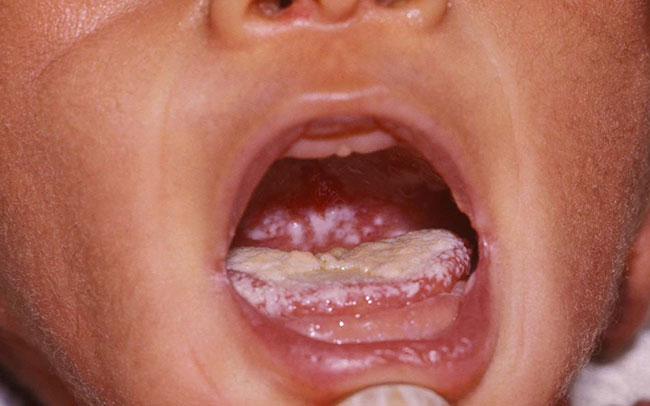
Oral thrush is a common fungal infection in the mouth. It can be easily and quickly treated if it doesn’t clear up on its own.
How do I know if my baby has thrush?
Look out for white spots or patches on your baby’s cheeks, gums and palate. These patches can look like milk spots, but if you rub them there will be a raw area underneath.
Your baby may fuss when breastfeeding or might even refuse your breast or bottle.
Sometimes babies get nappy rash when they have oral thrush. It might look red or bright pink with small raised spots and you might find standard nappy rash creams aren’t effective in clearing the rash.
If you are breastfeeding you may notice that you have thrush on your nipples, making them painful, red and cracked.
What treatment will we receive?
Your GP or Health Visitor may prescribe an antifungal treatment. The type of treatment will depend on the age of your baby. A course of treatment usually takes 7 days. If there is no improvement after a week, ask your GP for further advice.
If you have thrush on your breasts, the GP will prescribe medicine for you too.
How can I prevent thrush?
Oral thrush will usually become less of a problem as your baby’s immune system develops.
Take extra care when sterilising bottles, soothers and other feeding equipment.
If you still have thrush, wash your breasts after feeding. Use plain water, pat dry and applied any prescribed treatment to avoid further contamination.
To prevent re-infection, make sure you keep separate towels for your hands before and after feeding, and before and after changing your baby’s nappy.

 Oral thrush is a common fungal infection in the mouth. It can be easily and quickly treated if it doesn’t clear up on its own.
