This stage is the time between the birth of your baby and the expulsion of your placenta. After your baby is born, he/she will still be attached to the umbilical cord, which is attached to the placenta inside the womb. The cord should be left intact and not cut immediately, unless there is a problem with your baby’s breathing, or you are bleeding heavily.There are two options for the delivery of your placenta. The first option is known as physiological third stage, and the other is active third stage.
Physiological third stage
This option may be suitable if you are planning a physiological (natural) birth. If you require an assisted birth, or if your midwife is worried you may be at a higher risk of bleeding after birth, this may not be recommended for you. Some research has found that bleeding after birth can be slightly increased if the placenta is expelled naturally, however if you are fit and healthy with good iron levels pre-birth, this is unlikely to cause any problems for you.After your baby is born, he/she will remain attached to the placenta via the umbilical cord, which provides oxygen and blood supply whilst your baby also starts to breathe. After 10-15 minutes this blood supply will naturally stop as the placenta separates from the womb. At this point the cord can be secured and cut. Soon after you will feel some mild contractions in the womb and perhaps an urge to push. You may find adopting upright positions helps, and your placenta will slide out easily. This is normally painless as the placenta is soft.
Active third stage
If you opt for an active third stage, or if your midwife recommends it after the birth of your baby, your midwife will give you an injection of a medication that causes the womb to contract. This injection normally takes a few minutes to work, and at this point the baby’s cord will be secured and cut. Your midwife/doctor will then place gentle pressure on your lower abdomen and carefully pull on the umbilical cord, causing the placenta to deliver. This process normally takes between 10-20 minutes.

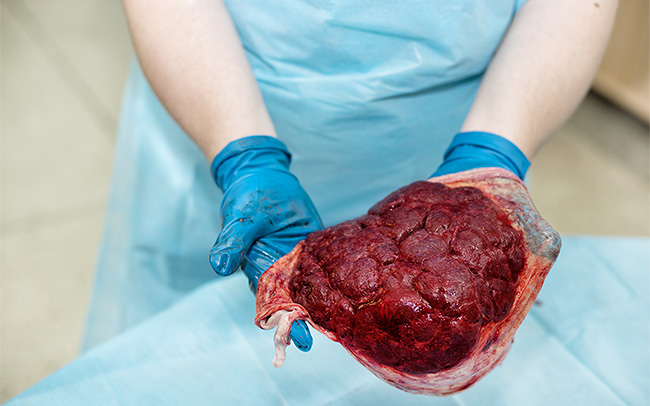 This stage is the time between the birth of your baby and the expulsion of your placenta.
After your baby is born, he/she will still be attached to the umbilical cord, which is attached to the placenta inside the womb. The cord should be left intact and not cut immediately, unless there is a problem with your baby’s breathing, or you are bleeding heavily.
There are two options for the delivery of your placenta. The first option is known as physiological third stage, and the other is active third stage.
This stage is the time between the birth of your baby and the expulsion of your placenta.
After your baby is born, he/she will still be attached to the umbilical cord, which is attached to the placenta inside the womb. The cord should be left intact and not cut immediately, unless there is a problem with your baby’s breathing, or you are bleeding heavily.
There are two options for the delivery of your placenta. The first option is known as physiological third stage, and the other is active third stage.


