
Hand expressing colostrum before your baby is born
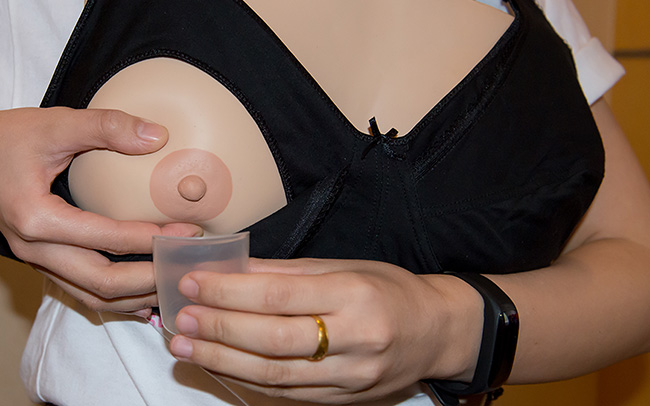 Mothers start to produce colostrum (early breast milk) mid-way through pregnancy. Learning how to express this milk before your baby comes can be very useful, particularly if your baby is likely to be premature or separated from you after birth or if you are diabetic or taking medication for high blood pressure. You can start this from around 37 weeks gestation, and you can collect your colostrum and store it in the freezer if you wish. You may only express a few drops of colostrum when you first start hand expression – this is normal and does not mean that you don’t have any milk. It is still worthwhile practising the technique in preparation for your baby’s arrival.
Read the related links for more information and talk to your midwife or infant feeding specialist.
See How to hand express within Expressing milk in the After your baby is born section for a step by step guide and video.
Mothers start to produce colostrum (early breast milk) mid-way through pregnancy. Learning how to express this milk before your baby comes can be very useful, particularly if your baby is likely to be premature or separated from you after birth or if you are diabetic or taking medication for high blood pressure. You can start this from around 37 weeks gestation, and you can collect your colostrum and store it in the freezer if you wish. You may only express a few drops of colostrum when you first start hand expression – this is normal and does not mean that you don’t have any milk. It is still worthwhile practising the technique in preparation for your baby’s arrival.
Read the related links for more information and talk to your midwife or infant feeding specialist.
See How to hand express within Expressing milk in the After your baby is born section for a step by step guide and video.
When to consider hand expressing
Any expectant mother can express her breast milk from 37 weeks gestation. It is particularly useful if you know that your baby is at an increased risk of having a low blood sugar in the first few hours after birth. This can include:- women with gestational diabetes or pre-existing diabetes in pregnancy
- infants diagnosed during the antenatal period with cleft lip and or palate and congenital conditions
- mothers having a planned (‘elective’) caesarean birth
- infants with intrauterine growth restrictions
- mothers with breast hypoplasia
- women with hyperandrogenesis (polycystic ovarian disease)
- women who have had breast surgery
- women with multiple sclerosis or rheumatoid disease
- strong family history of allergies or inflammatory bowel disease
- mothers with high blood pressure
- mothers taking beta blockers (e.g. labetalol).
Breastfeeding and diabetes
- babies who are breastfed are less likely to develop childhood diabetes
- it is recommended that mothers who have diabetes avoid giving their baby any formula milk
- if you have diabetes and are insulin dependent you may find that you need less insulin when you are breastfeeding and may need to eat more
- if you have gestational diabetes and breastfeed you are less likely to go on to develop diabetes in later life.
When hand expressing is not recommended
Antenatal hand expression is not recommended in the following circumstances:- history of threatened or premature labour
- cervical incompetence
- cervical suture in situ.
How to harvest your colostrum


